

Windstar Cruises – Cuisines & Cultures of Spain, Portugal & France

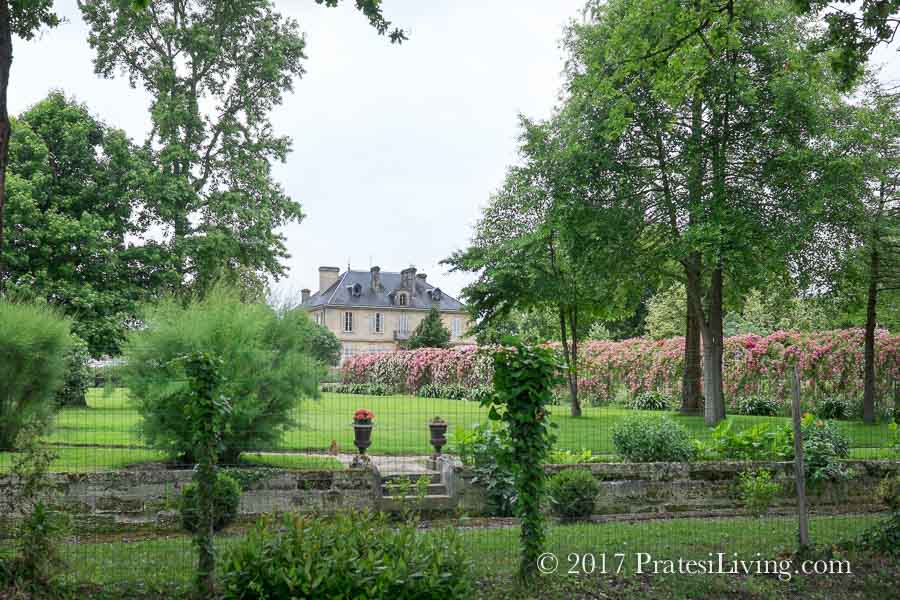
Gardens at the chateaux
All journeys have secret destinations of which the traveller is unaware. ~ Martin Buber
Last summer, we embarked on a once-in-a-lifetime journey with Windstar Cruises that took us from Lisbon, Portugal, to Dublin, Ireland, with stops at some of the most interesting and beautiful ports of call we have ever visited. If you read the first article covering our James Beard Culinary Cruise with Windstar, the video in the piece covered the itinerary and included images of these unique small towns and villages on this extraordinary and educational adventure.
Windstar Cruises is known for its small-ship cruising. Featuring six luxury yachts, their ships are able to navigate smaller ports and rivers where larger ships can’t go and offer itineraries and destinations that you would not otherwise experience on larger vessels.
The Cuisines & Cultures of Spain, Portugal & France
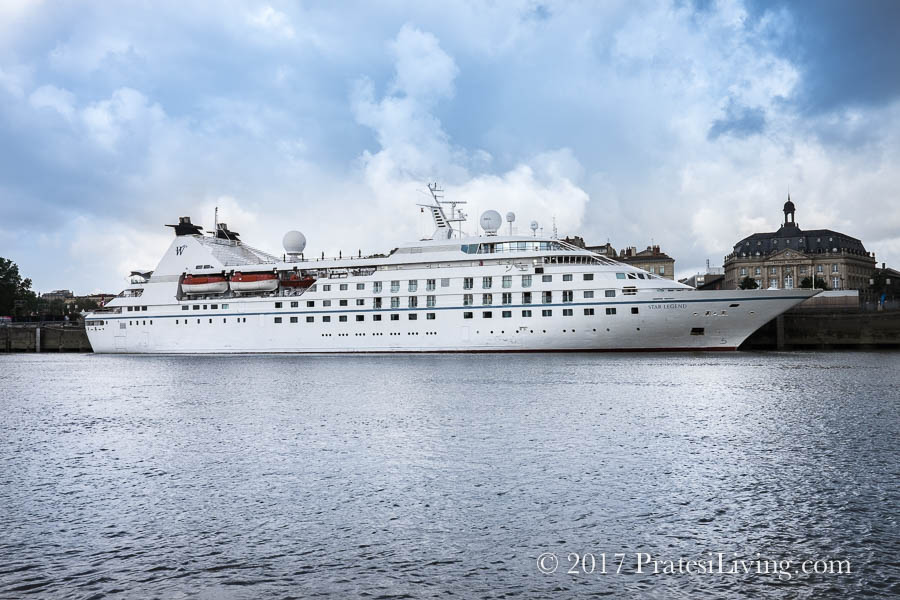
The Star Legend in Bordeaux
While we knew some of the ports of call on the itinerary, such as Bordeaux and the beautifully preserved walled city of Saint-Malo in France, there were lesser known destinations that took our breath away, such as the National Park Picos de Europa in the Asturias region of Spain.
Windstar is offering this itinerary again in June and August 2017. This spectacular cruise, the Cuisines & Cultures of Spain, Portugal & France, is not to be missed. Here are the highlights of the ports of call with a few images and a little history and information about each.
Port of embarkation – Lisbon, Portugal
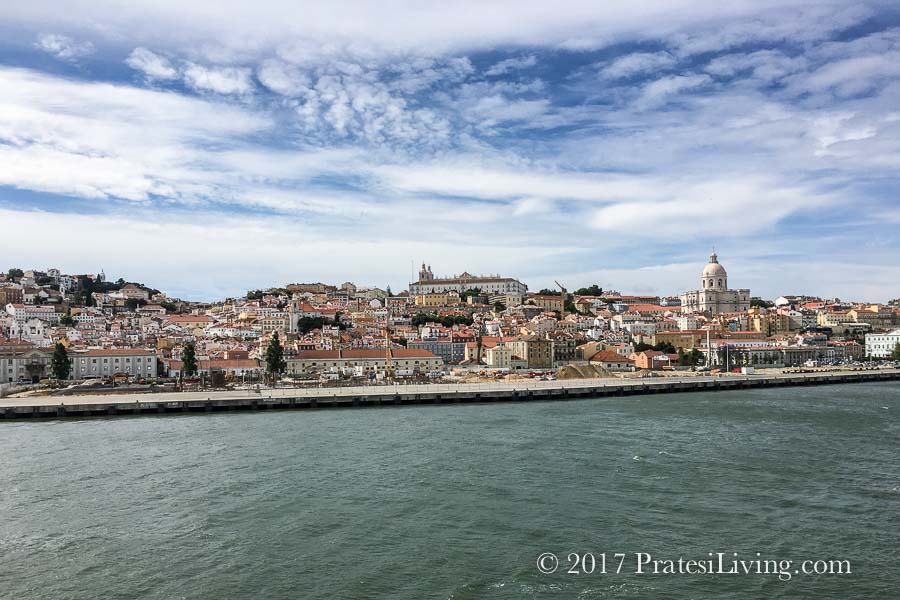
Lisbon sailaway
Lisbon has become one of the hottest travel destinations in the world. The capital of Portugal, Lisbon is continental Europe’s westernmost city and the only capital in Europe located on the Atlantic coast. This vibrant and colorful hilly city has much to offer visitors and is more affordable than many other great European cities due the combination of lower costs and the strong U.S. dollar.
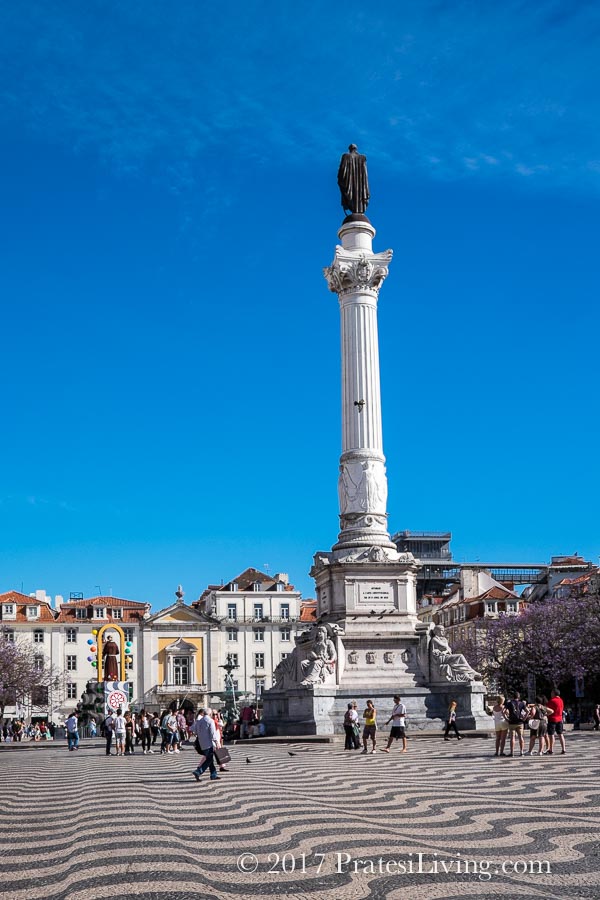
Praça Dom Pedro IV
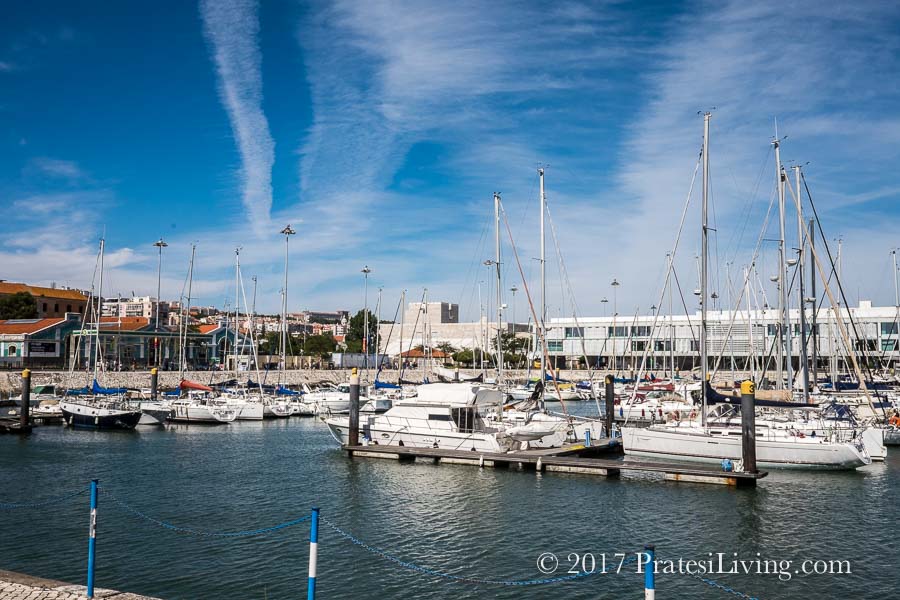
Sailboats in Lisbon Harbor
Lisbon has an interesting history, particularly around religious battles for control between the Christians and Muslims (the city was eventually settled under Christian rule in 1147). Lisbon became very prosperous in the 15th and 16th centuries during the time of exploration and the colonization of Africa, Asia, South America, and the Atlantic Islands. It was also a strategic seaport allowing for trade between the Mediterranean Sea and northern Europe. However, the 1755 Lisbon earthquake, combined with subsequent fires and a tsunami, nearly destroyed all of Lisbon and the neighboring areas. Sebastião José de Carvalho e Melo, 1st Marquis of Pombal, was instrumental in rebuilding of the city and created the commercial and financial districts known as Baixa Pombalina (Pombaline Lower Town).
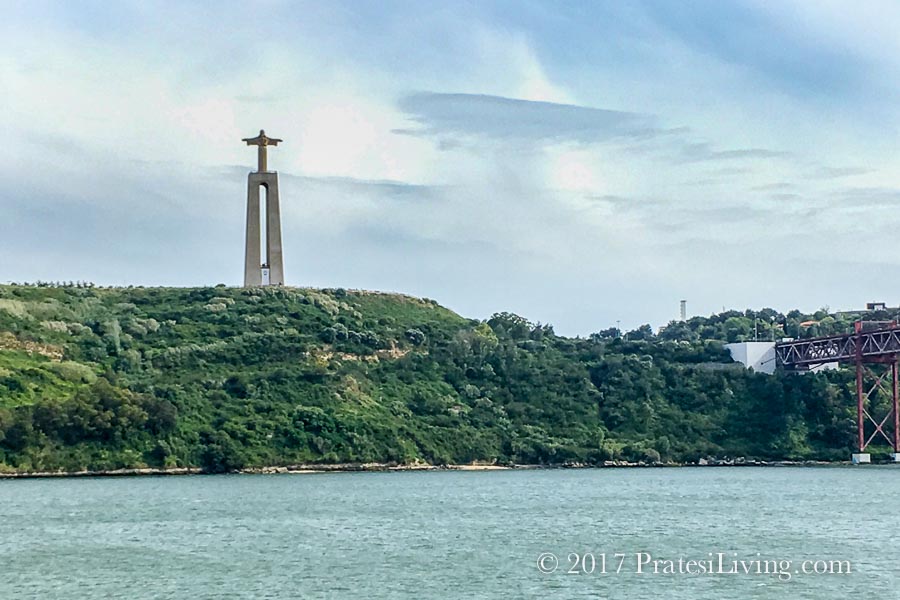
Cristo Rei statue (Christ the King)
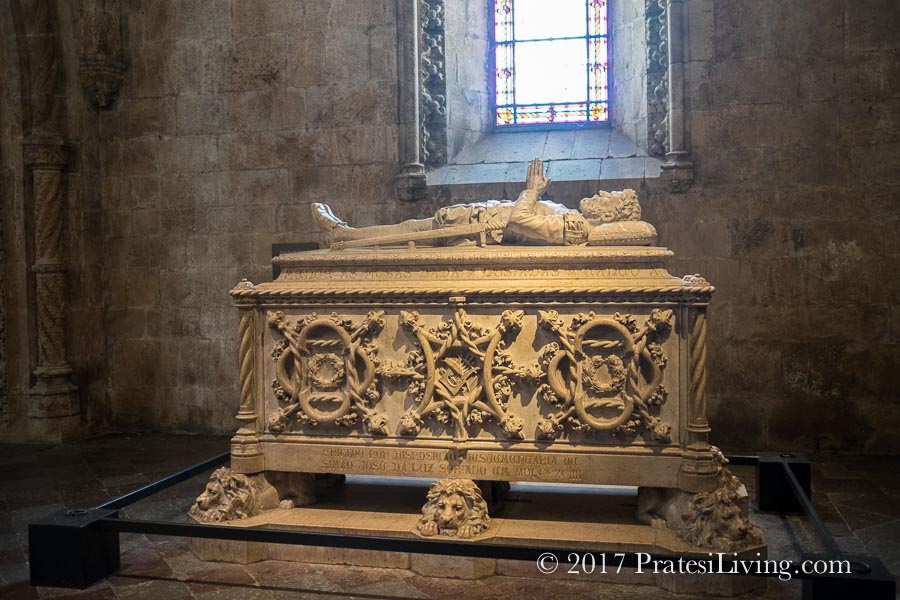
Tomb of explorer Vasco da Gama at Jerónimos Monastery
Some of the highlights of the city are its two UNESCO World Heritage Sites: the Jerónimos Monistary near the Tagus river in the parish of Belém, in the Lisbon Municipality, and the Tower of Belém, built on the Tagus River. While in the area, don’t miss the famous warm custard tarts with their creamy filling and buttery rich flaky pastry at Pastéis de Belém, where they have been making this Lisbon tradition since 1837.
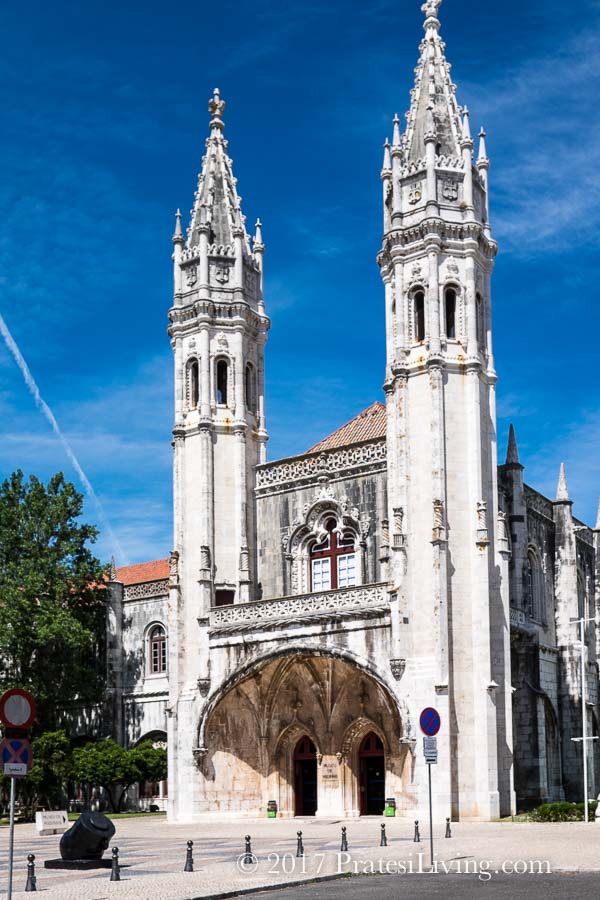
Jerónimos Monastery
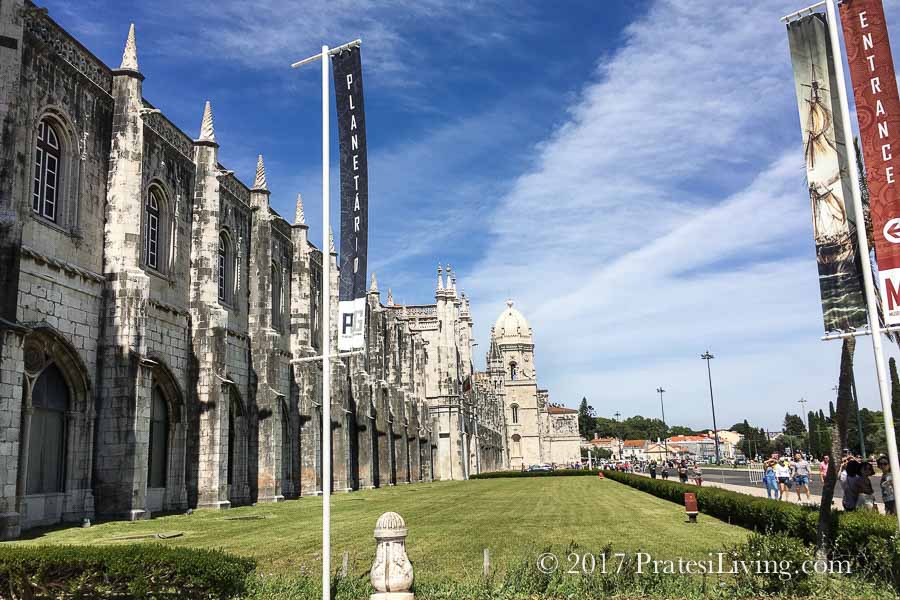
Another view of the monastery
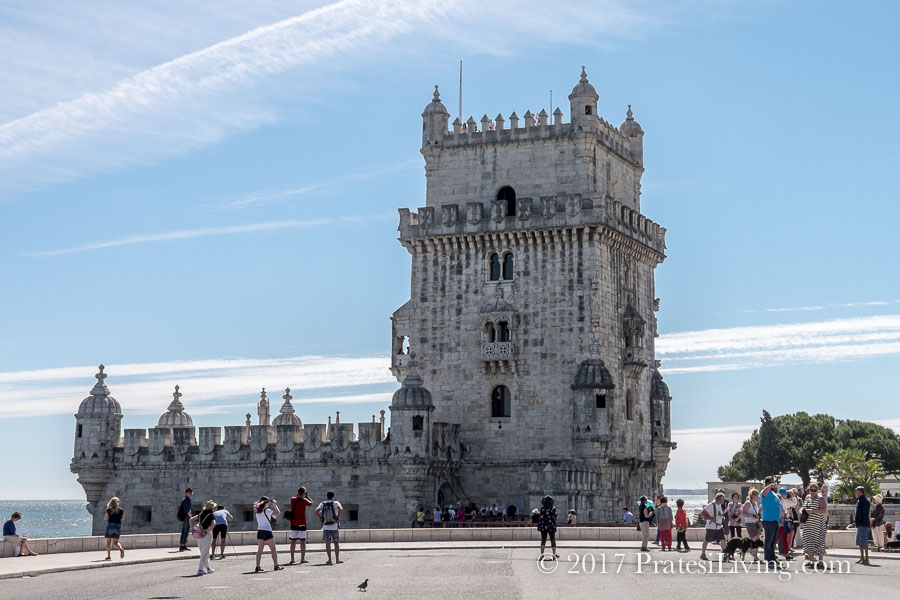
Belém Tower
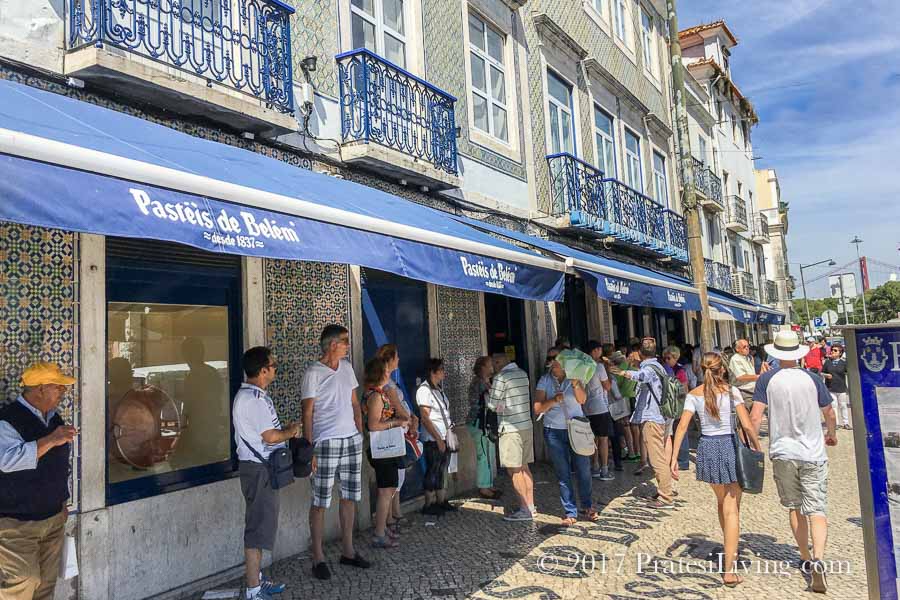
Pastéis de Belém
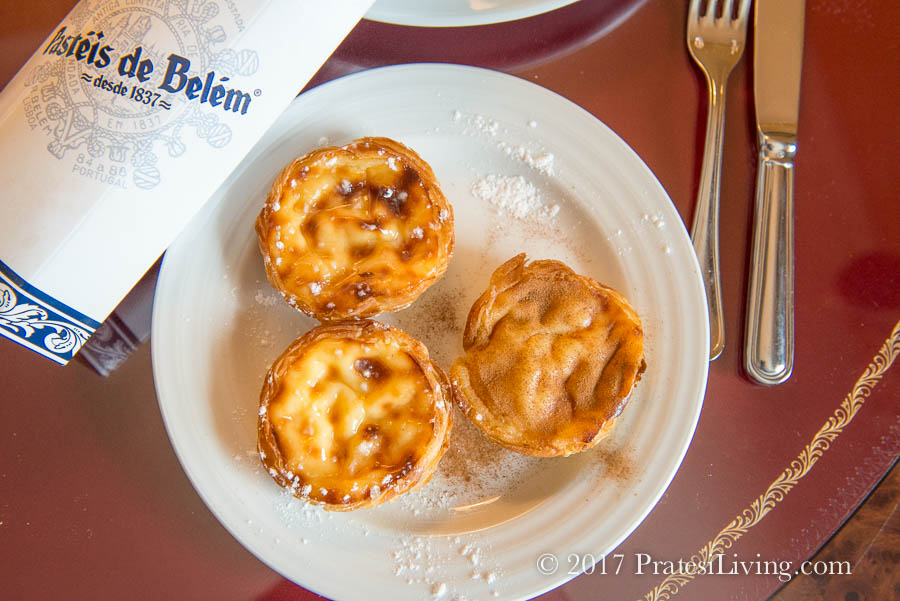
Custard tarts
If you love to nosh and want to try several small bites of local and regional specialties in a casual atmosphere, visit Time Out Market. What the Portuguese call fast food, and what we think of fast food, are two totally different concepts and I’ll take their version any day. Prego, a thin steak sandwich served on a soft bun, topped with shredded lettuce, and garlicky shrimp sautéed in olive oil, is very popular and far more exciting than a fast food burger in the U.S. For dessert, a must try is the O Melhor Bolo de Chocolate do Mundo, a cake that has been trade-marked as the “Best Chocolate Cake in the World” by Lisbon chef Carlos Lopes. Made without flour or baking powder, this treat is composed of chocolate meringue layered alternately with rich chocolate mousse and topped with a chocolate ganache and is decadently sweet, even for a chocoholic.
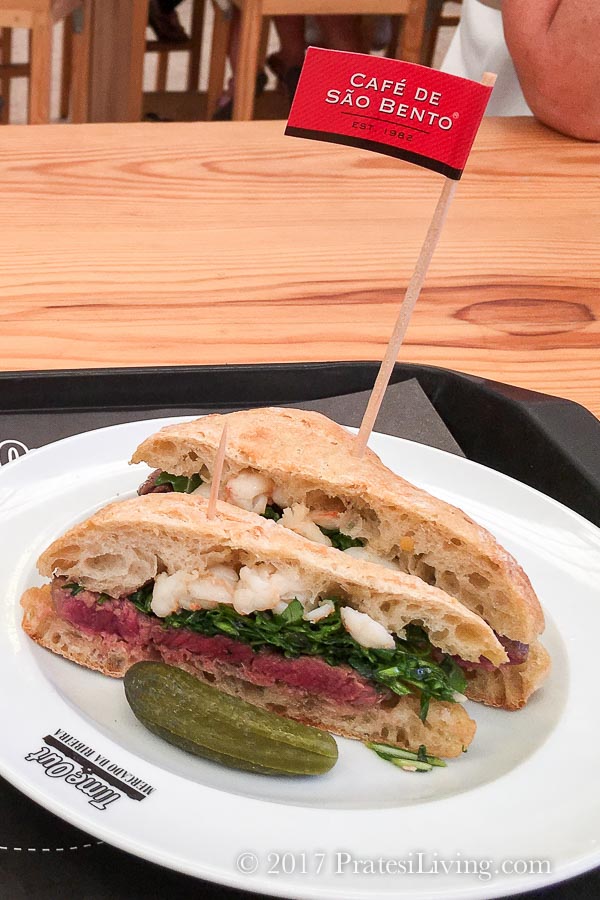
Prego
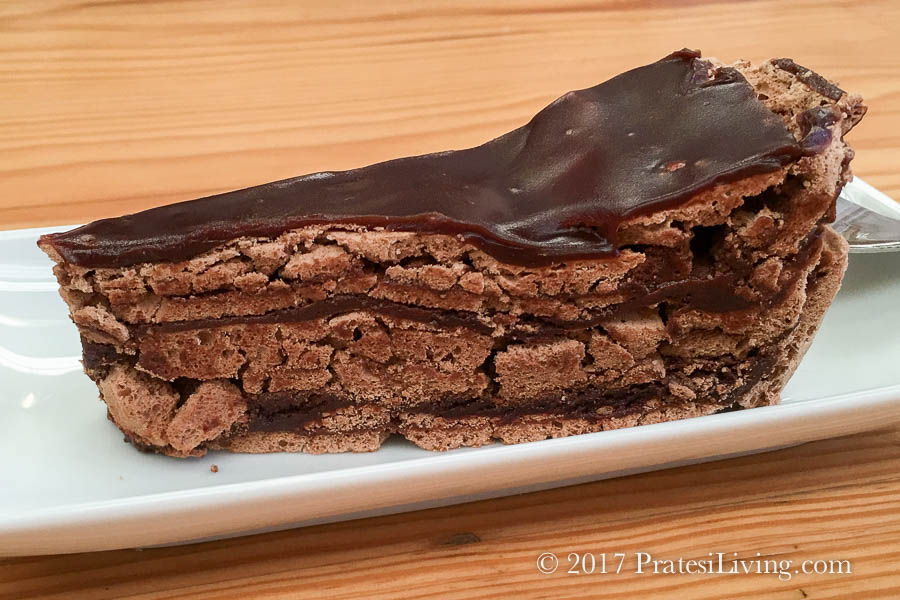
O Melhor Bolo de Chocolate do Mundo
To get a glimpse of local life, visit the city’s Alfama neighborhood, listen to the traditional melancholy folk music of Fado, head for the hills to visit one of the city’s spectacular viewpoints such as Miradouro da Nossa Senhora do Monte (Our Lady of the Hill Viewpoint), to see the city from above, and spend the afternoon at one of the city’s local squares to enjoy a cocktail or sip a glass of wine and listen to live music.
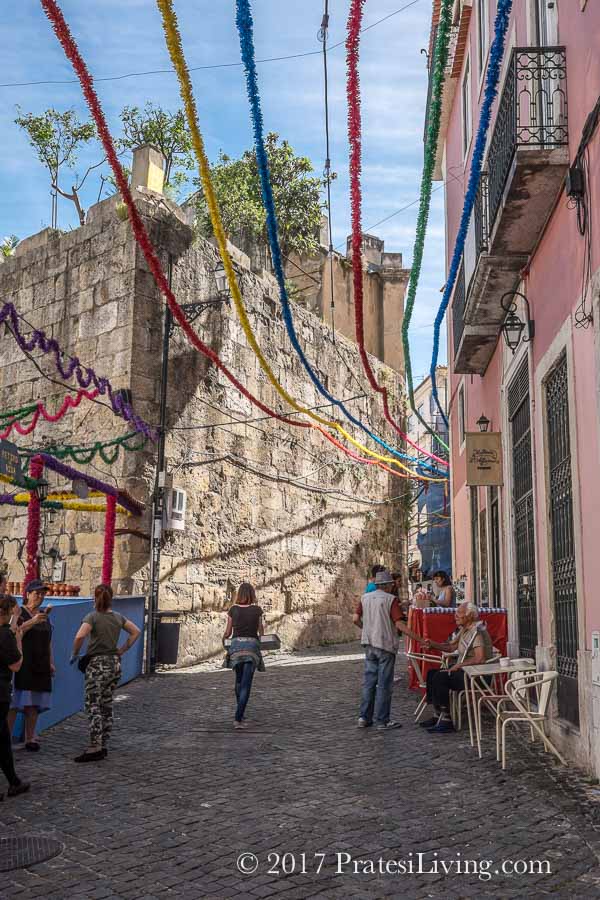
Festival preparation in the Alfama
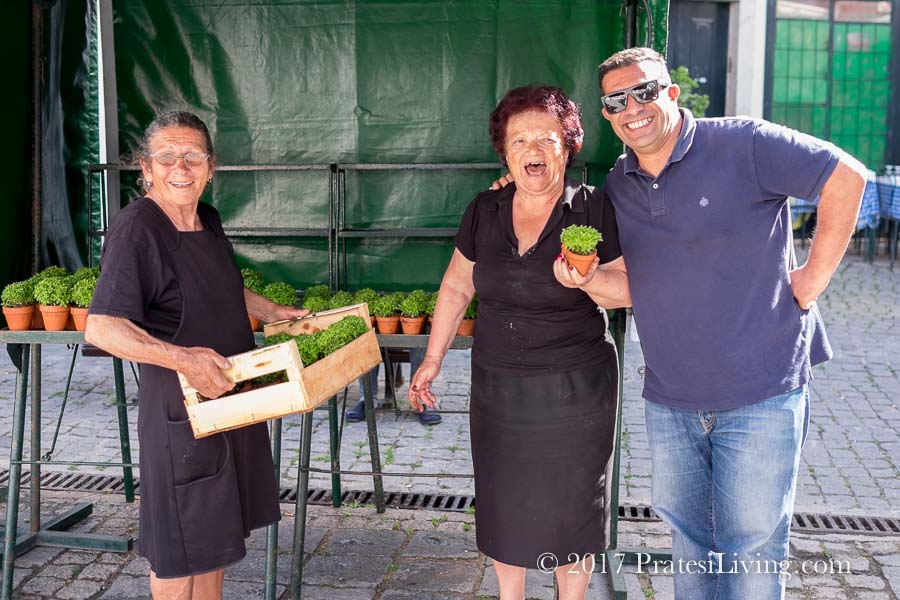
Our tour guide Pedro and local women in the Alfama
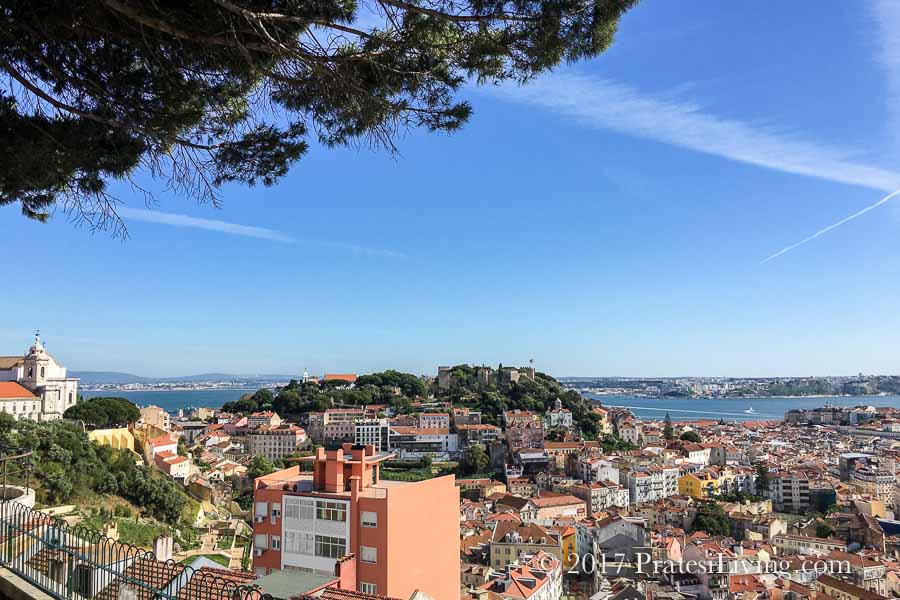
View of Lisbon from Miradouro da Nossa Senhora do Monte
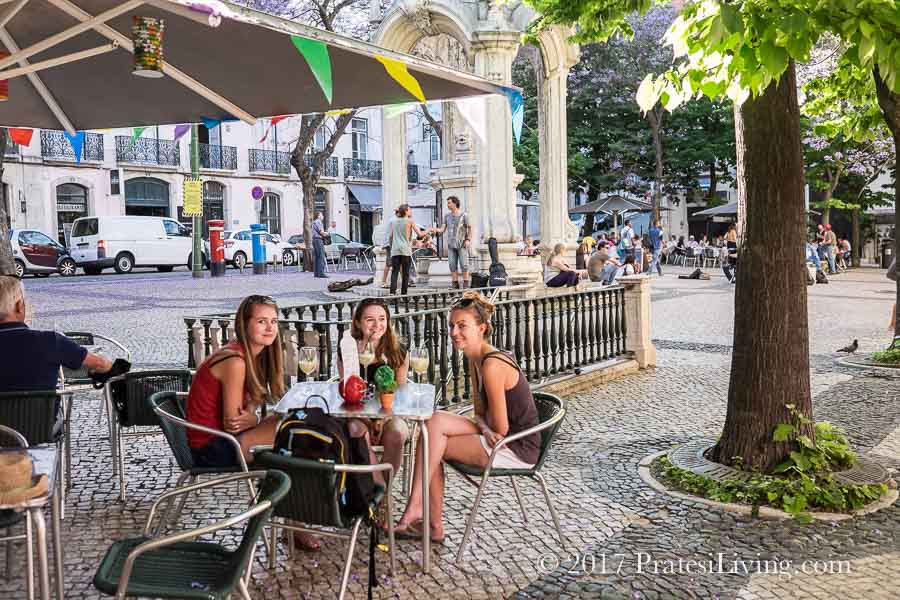
Enjoying the afternoon at a local square
Port of call – Porto, Portugal
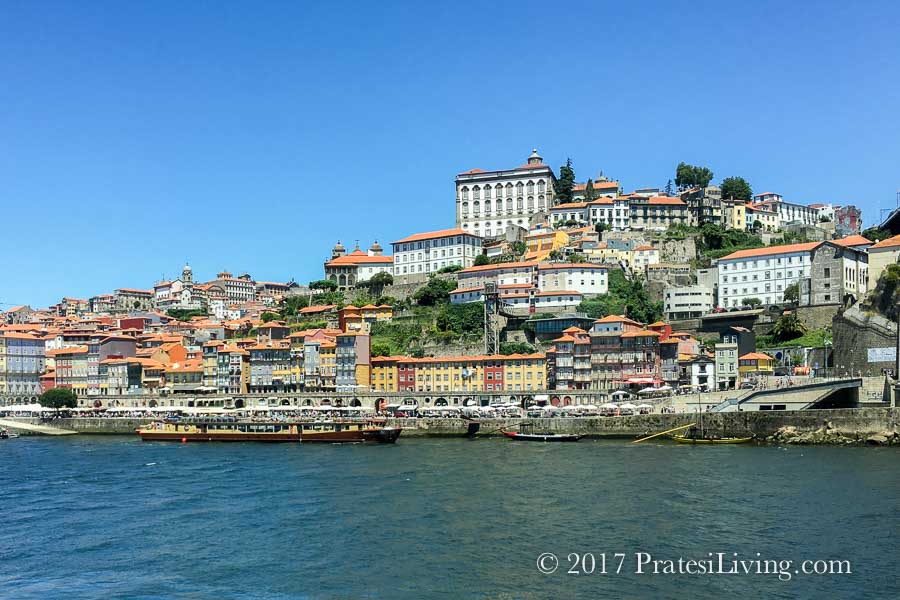
Porto
You may know this city in Portugal for its famous port wine and location on the Duoro River. An important port city and center for trade over the years, the Port of Leixoes is Portugal’s second largest port as well as a harbor for sardine fishing. You will find some of the finest and freshest fish in Porto as well as one of the most fought over dishes in terms of who makes the best Francesinha, a sandwich comprised of different types of meat and topped with melted cheese and a hot sauce.
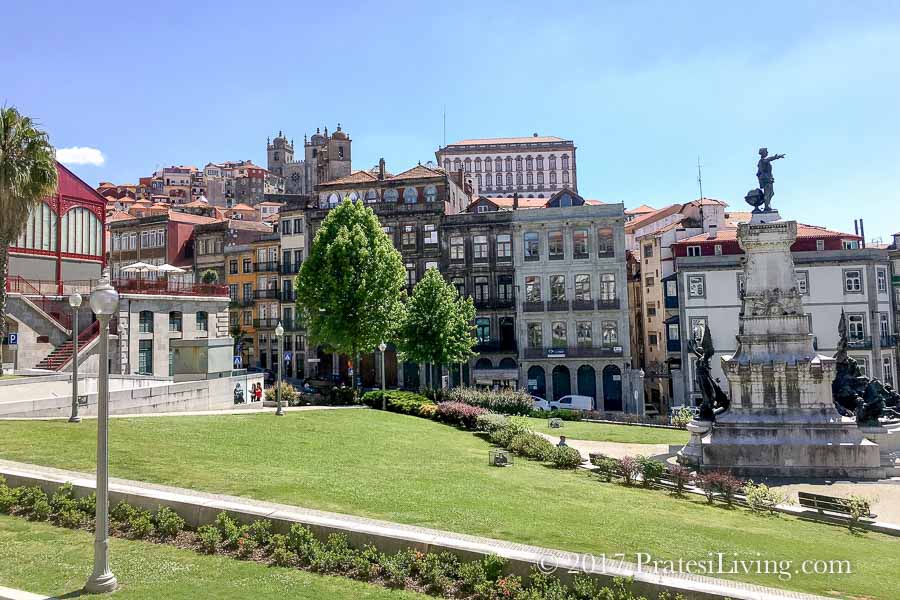
The hilly city of Porto
Another hilly city and a UNESCO World Heritage Site, Porto is built into the granite cliffs along the Douro River. It’s wonderfully picturesque with its mix of architecture from Roman, Gothic, Baroque, Neoclassic, and Renaissance times, winding medieval alleyways, staircases, and tiled buildings and churches. There are a number of attractions, including the Roman ruins at Koolhaas, 18th century Torre dos Clerigos (Tower of the Clerics) and Livraria Lello, also known as Livraria Lello & Irmão or Livraria Chardron bookstore. One of the oldest bookstores in Portugal and one of the most interesting and beautiful in the world with its artistic handcrafted staircase of curved dark wooden banisters and rails and bookshelves that rise three stories high framed with gorgeous hand-carved wooden risers, this was the store that inspired J.K. Rowling’s Harry Potter library at Hogwart’s.
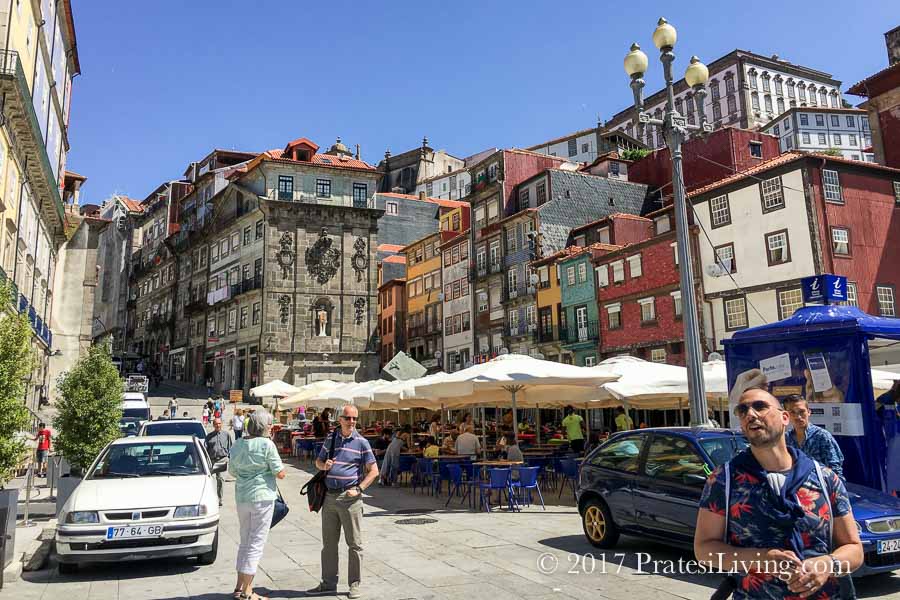
Colorful buildings and beautiful architecture
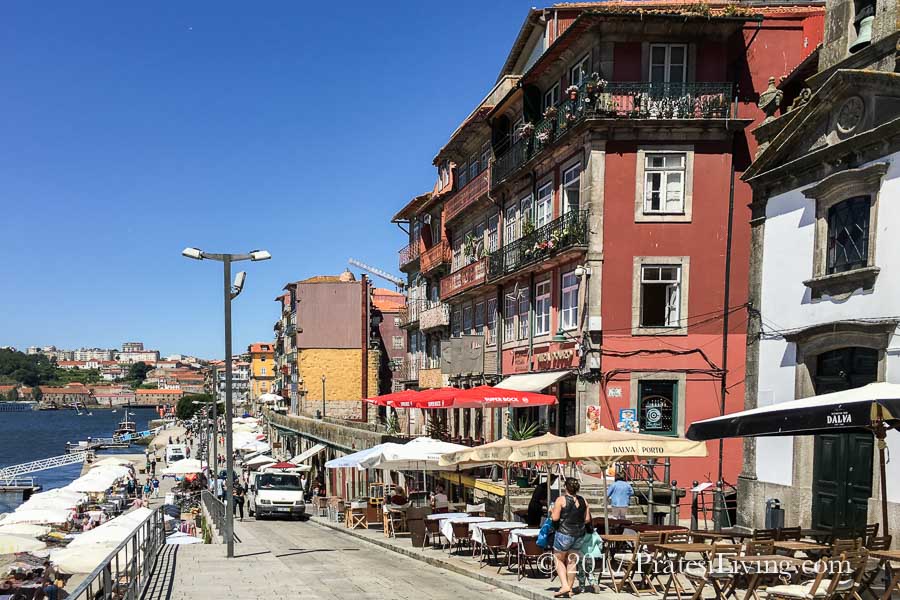
Along the Duoro River
Wander along the waterfront to see the merchants and artists set up along the Douro River or grab a seat in a café to sip a glass of Vino Verde, a popular light and dry white wine from the region. Head over to the other side of the river to sample world famous ports, such as those at Graham’s. Be sure to walk outside of Graham’s, behind their store and restaurant, to capture one of the best views of the city and the Duoro River.
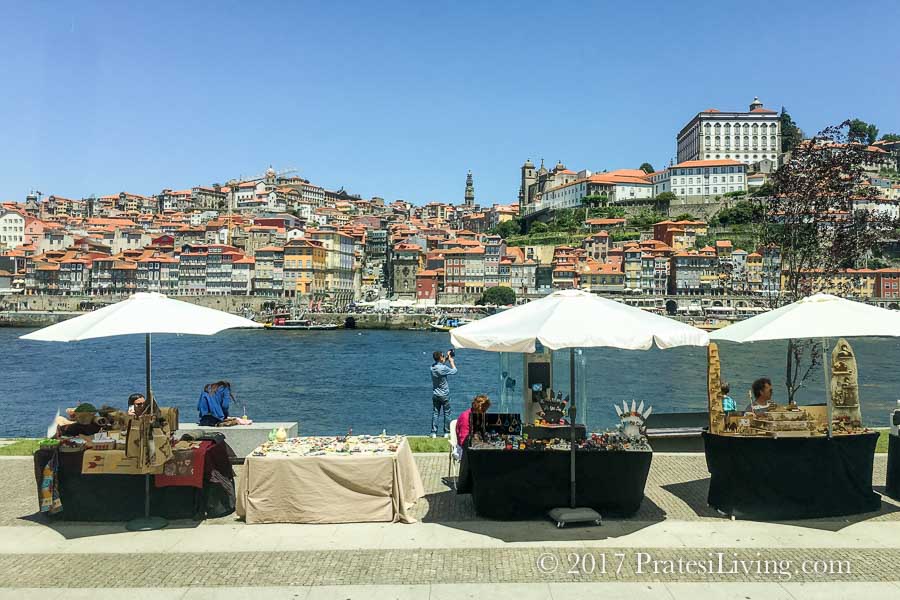
Merchants and artisans along the Duoro River
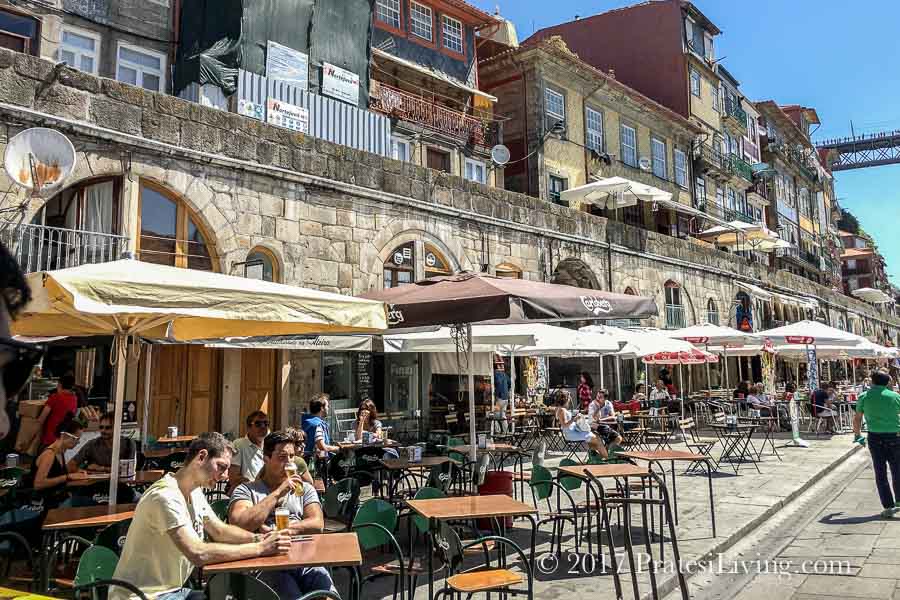
Cafés along the river
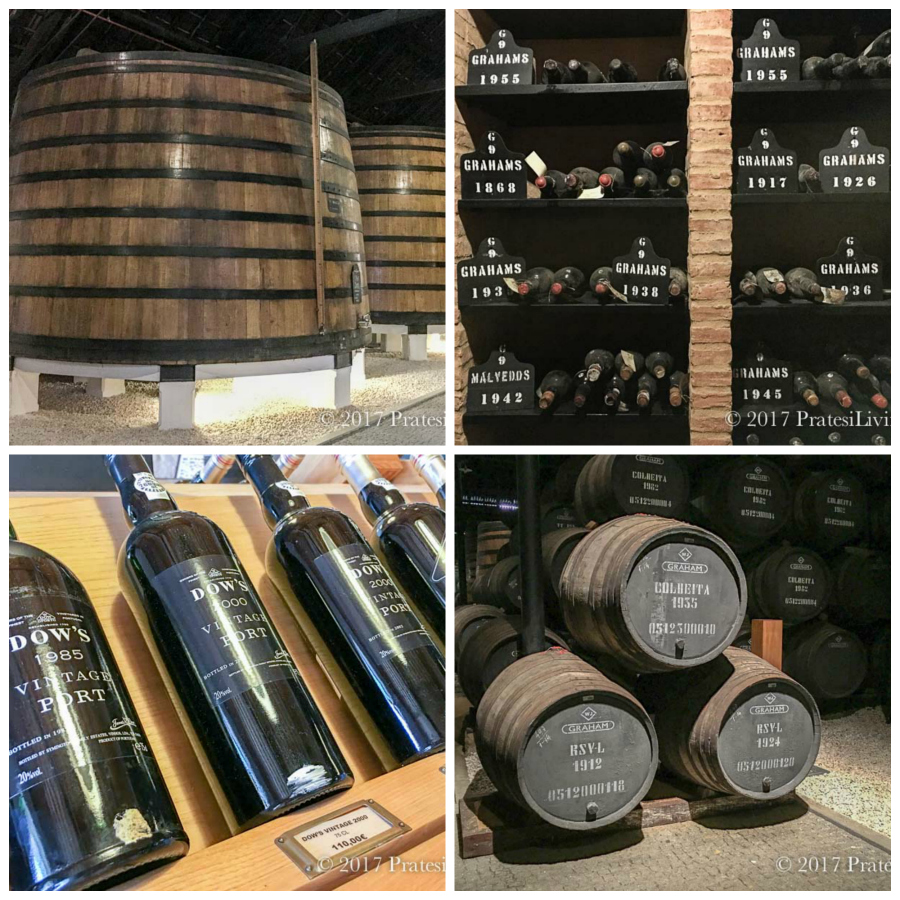
Graham’s
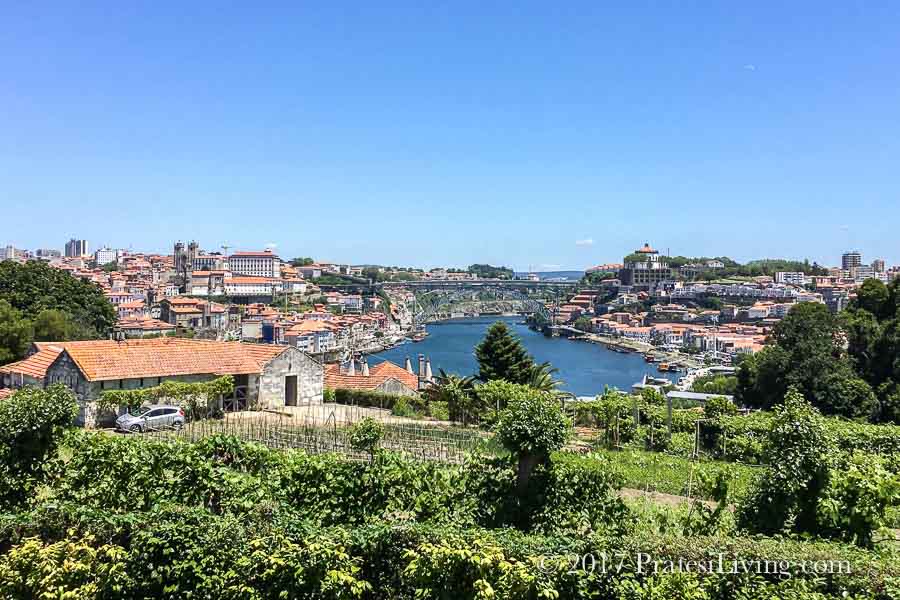
The view of Porto from Graham’s
Port of call – El Ferrol, Spain
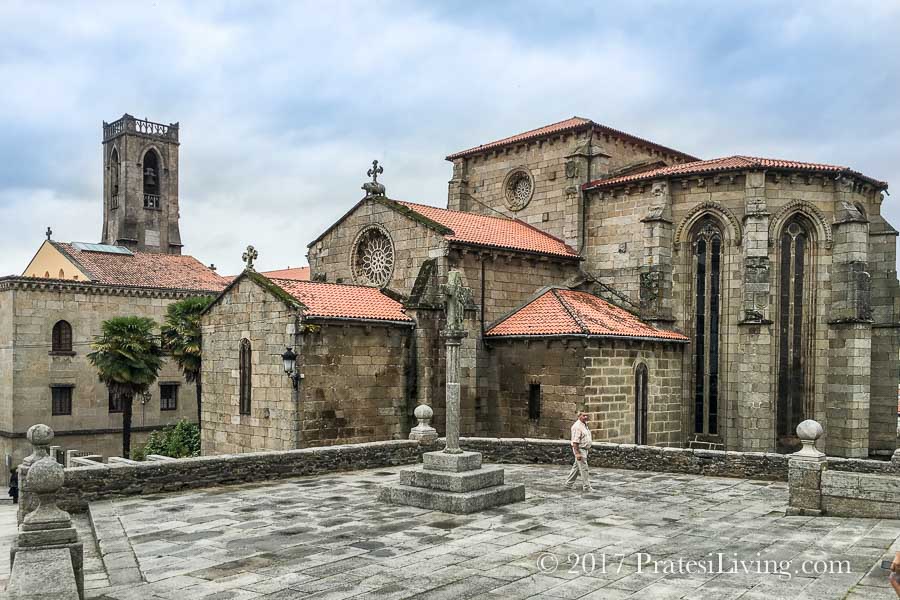
Igrexa de San Francisco (St. Francis Church)
El Ferrol is located in the Province of A Coruña in Galicia in northwestern Spain on the Atlantic coast. There were several excursions offered from this port of call, which was the gateway to other places, rather than a destination itself.
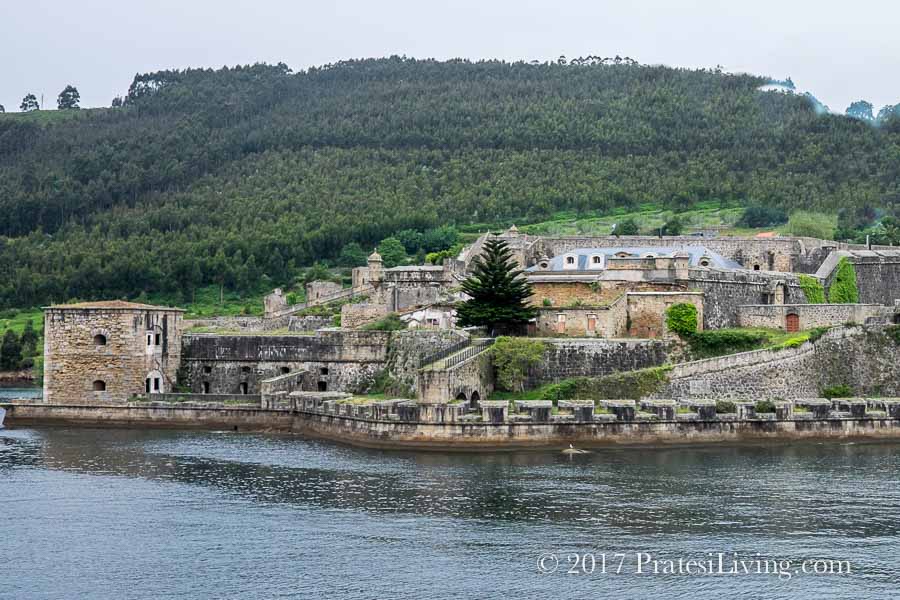
Arriving at the first port in Spain
We chose the El Ferrol & Betanzos, tour, which took us on a bus ride through the city. El Ferrol has a large military presence and shipbuilding industry and the Galicia region, known as the land of a 1,000 rivers, has an interesting history from its early Celtic and Gaelic origins and later by the Romans who left an infrastructure that still stands today.
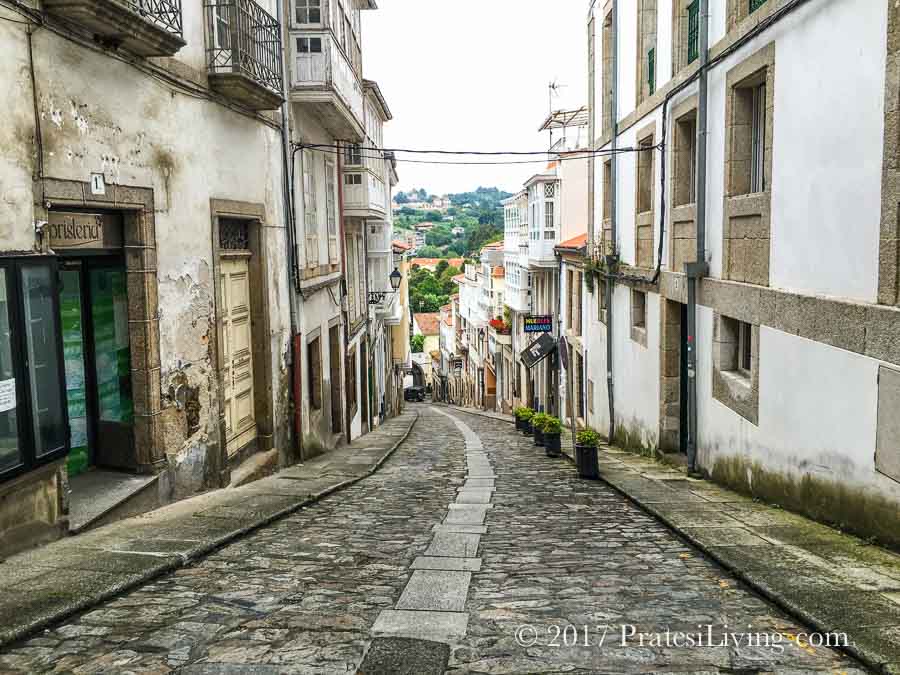
The hilly streets of Bentanzos
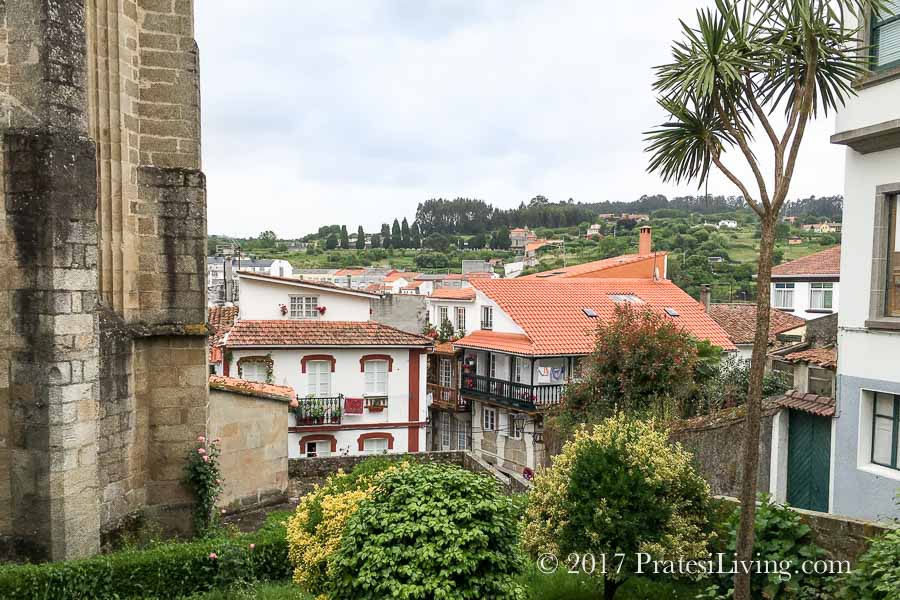
View from St. Francis Church
The small town of Bentanzos (now with about 13,000 residents) was once the capital of one of the seven provinces of the Kingdom of Galicia. Home to both historic and artistic heritage and one of the most interesting old quarters in Galacia, Bentanzos is situated between two rivers and is just 40 minutes from Santiago de Compostela. The central square, Irmáns García Naveira, welcomes visitors with its classic architecture and homes featuring wall-to-wall galerías or glassed-in balconies.
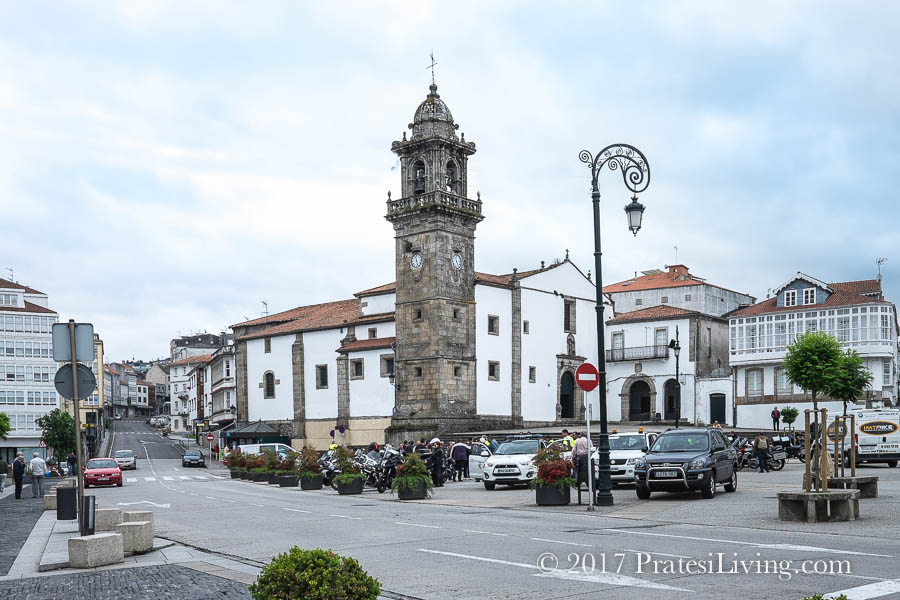
Irmáns García Naveira
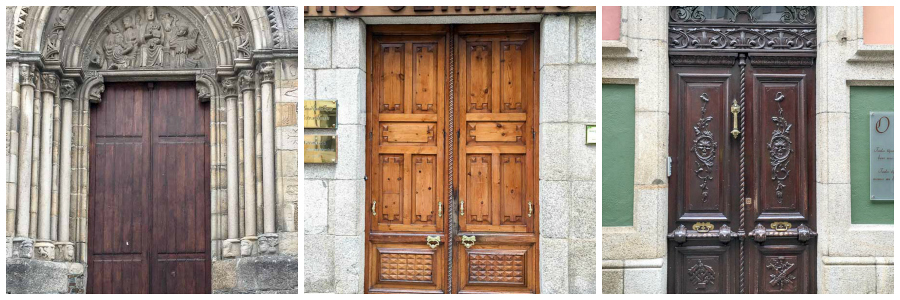
Doors of Bentanzos
The highlights of this tour are visiting the unique churches in Bentanzos, looking at the traditional Galician medieval architecture, and listening to the history surrounding the region. Be sure to visit the Consistorial Palace (18th century), Palace of Bendana (15th century), and the unique churches of Santa Maria (14th century) and St. Francis (1387). After touring the town, stop in a local café on one of the city’s squares and popular gathering spots for a glass of Albariño wine or a regional beer, Estrella Galicia.
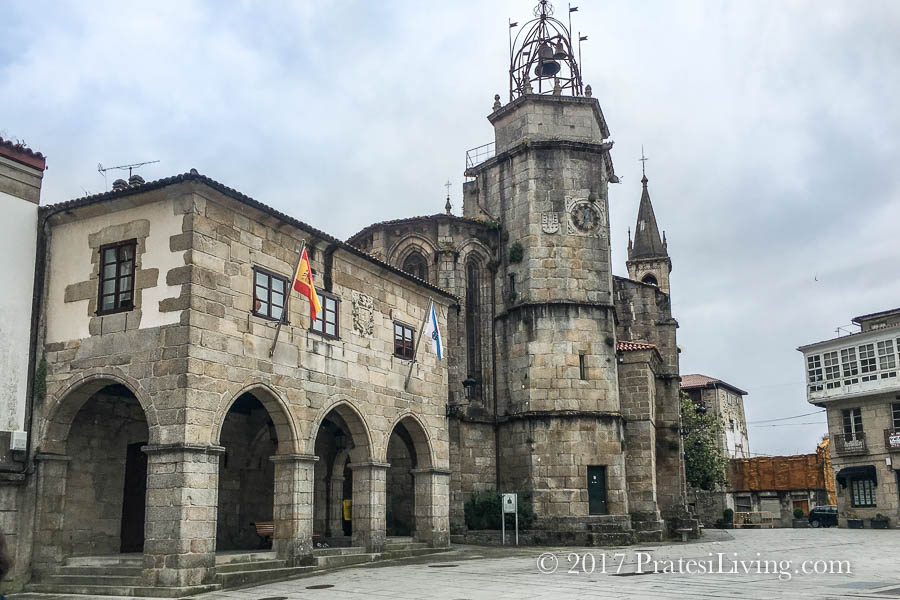
Santiago Church
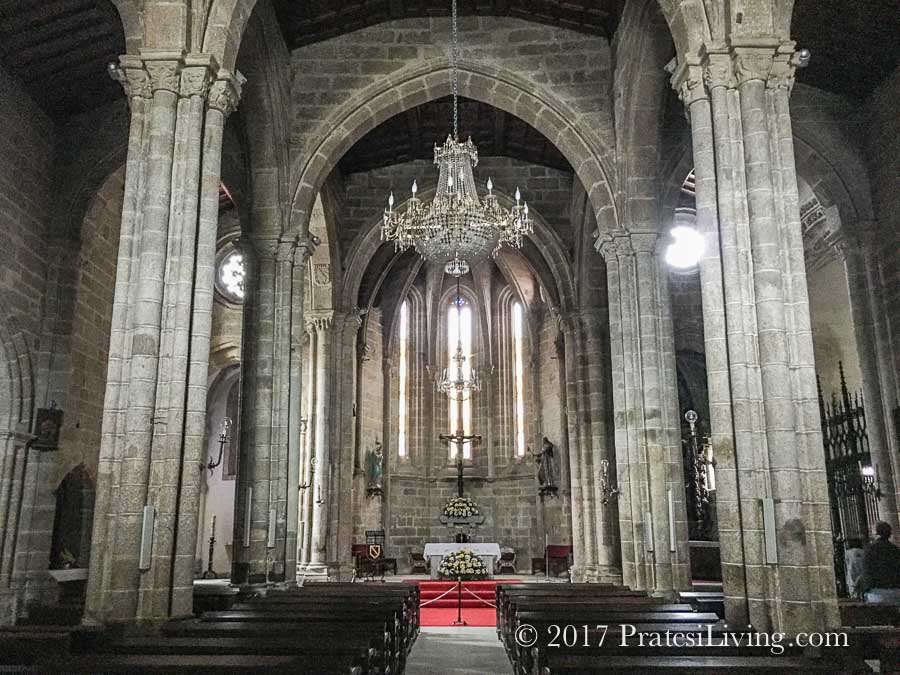
Inside the church
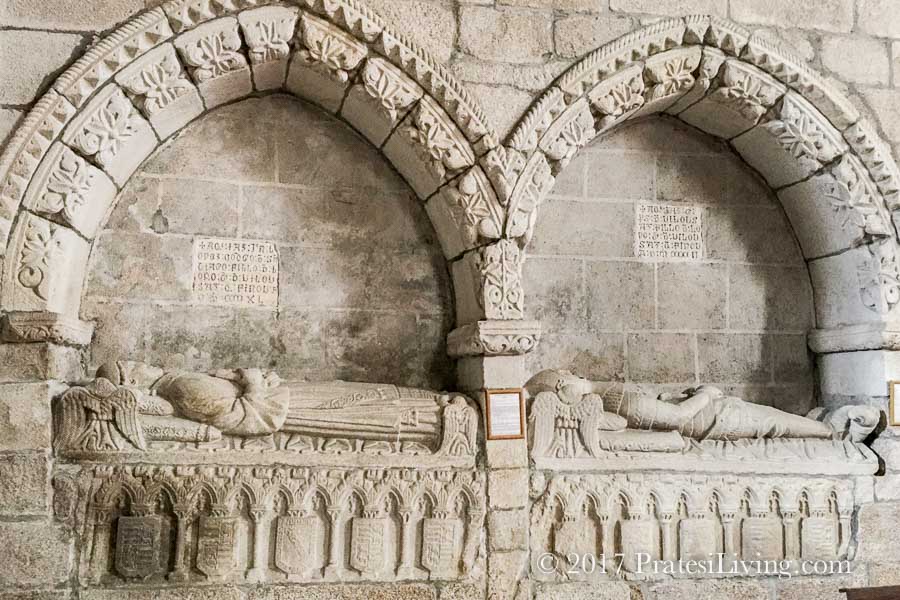
Tomb inside St. Francis Church
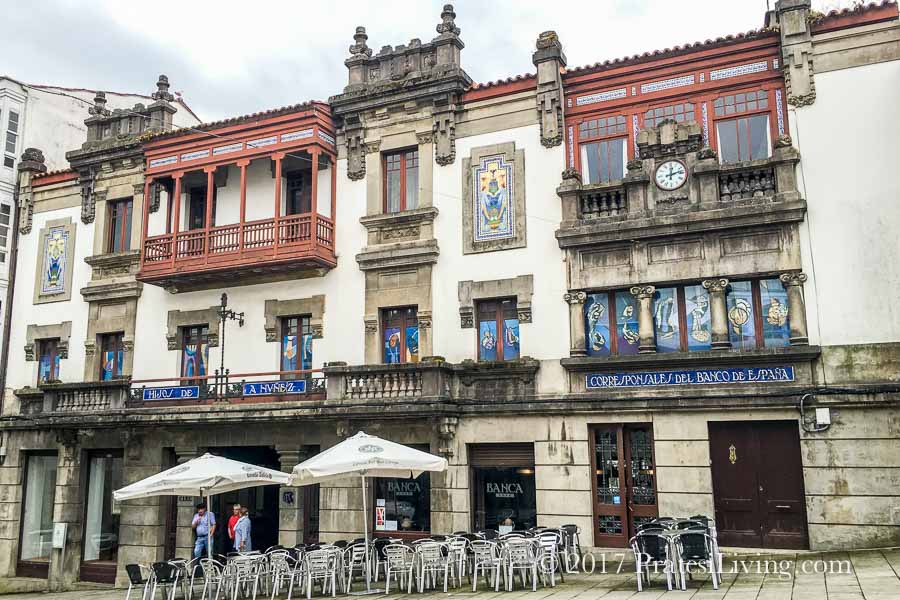
One of the many outdoor cafes in the town’s squares
Port of call – Gijon, Spain
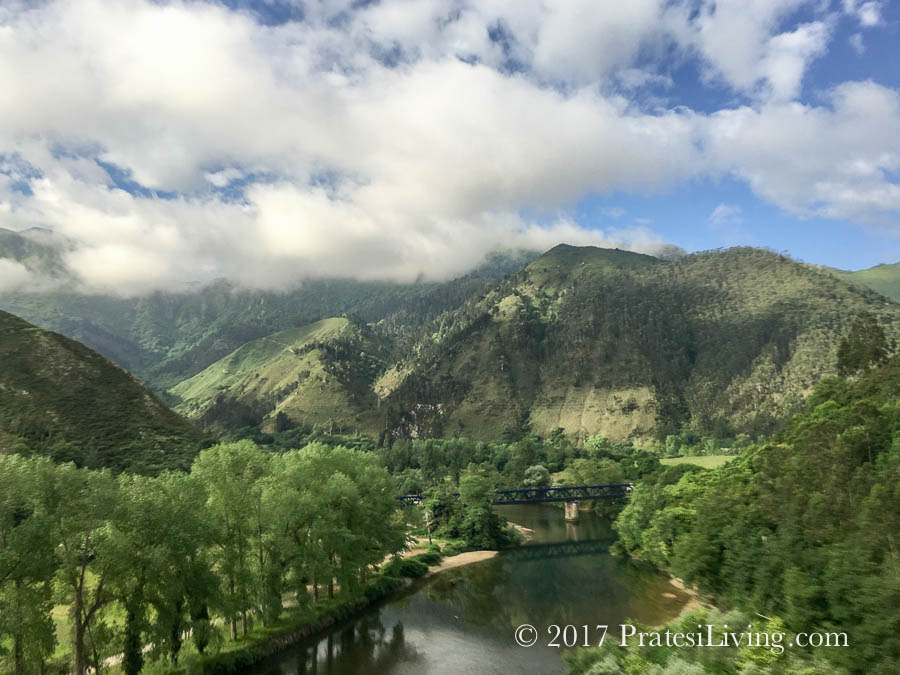
Scenery of Asturias
The city of Gijon dates back to pre-historic times, with many artifacts after Roman times. The Asturias region of Spain, where Gijon is located, has a rich Christian heritage.
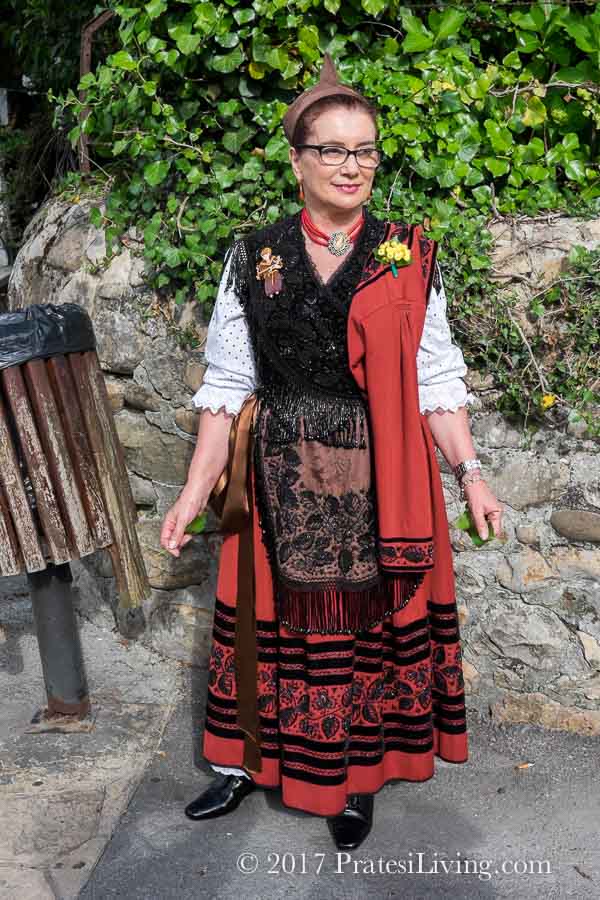
Traditional Asturian dress
Gijon is known for its beaches, Arbeyal and the San Lorenzo beach, its whaling heritage, sardine industry, and what is known to be the oldest Visogothic church in Spain, the Church of San Juan Bautistsa. However, one of the reasons we docked in the port was for the access to several incredible excursions. These included a visit to fishing villages along the Western coast of Asturia, an Asturian cider tour, and one of the most surprising excursions of the cruise, a visit to the charming town of Cangas de Onis, the first capital of Asturias, and the breathtaking and unexpected scenery of Covadonga and the National Park Picos de Europa. The National Park was like something out of a scene from an IMAX movie and completely surreal.
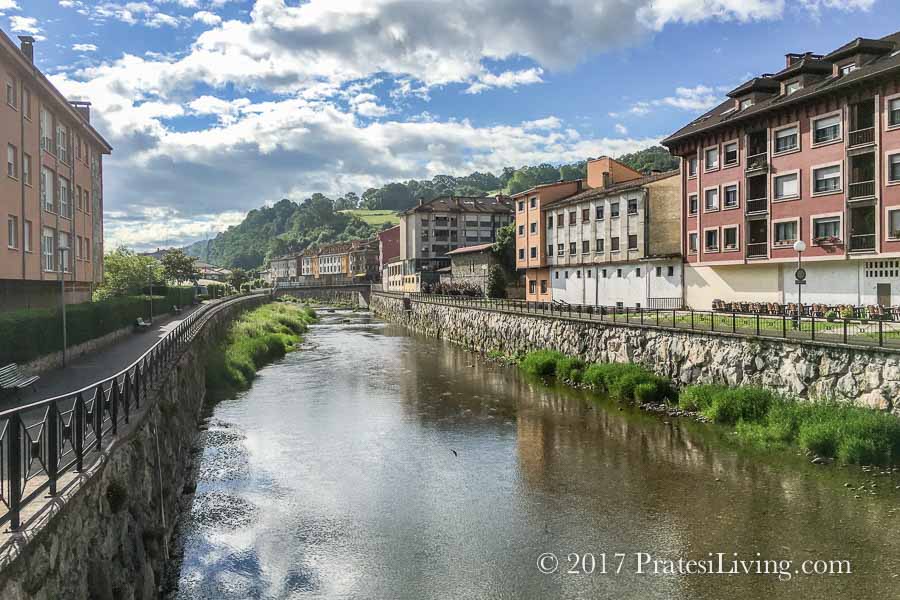
Heading in to Cangas de Onis
Not having traveled to this region of Spain before, we had no idea what to expect, but it was absolutely breathtaking with lush green forests, mountains, and rivers. The small town of Cangas de Onis, with its Roman Bridge and quaint shops filled with local Asturian products, like Fabada beans, cured meats, cheeses, and ciders, was delightful to explore.
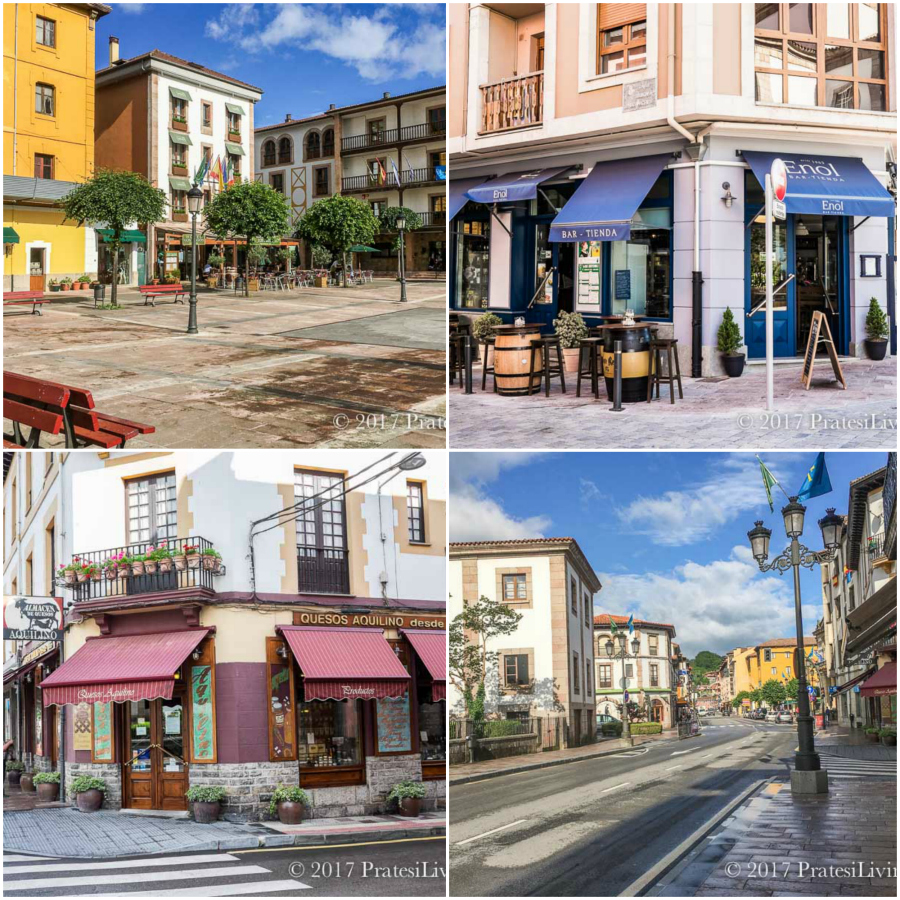
Cangas de Onis
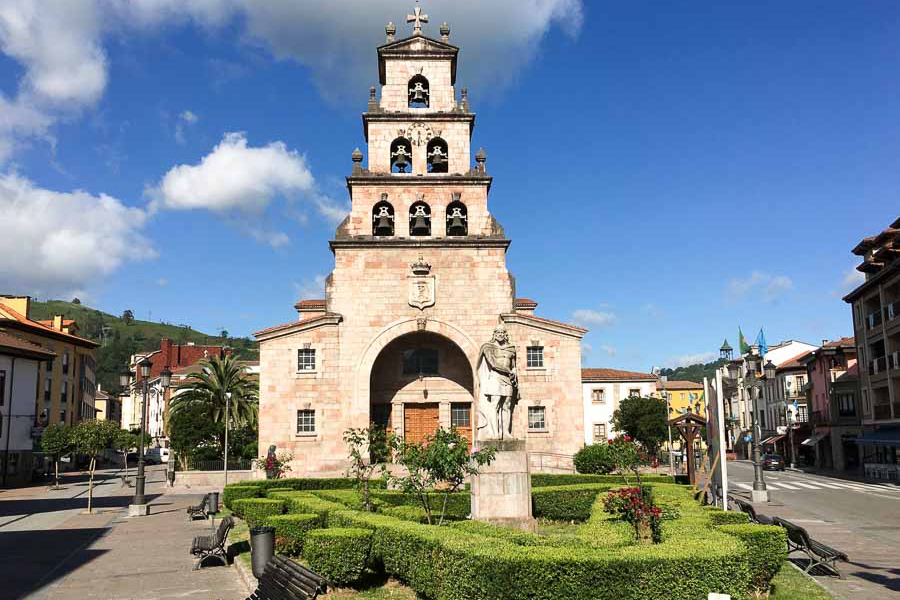
Church of the Assumption
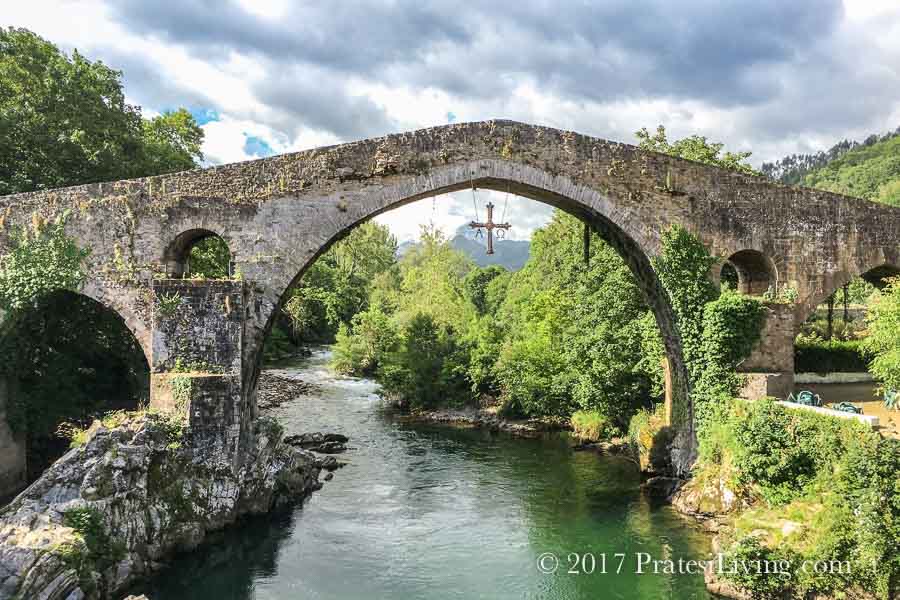
The Roman Bridge
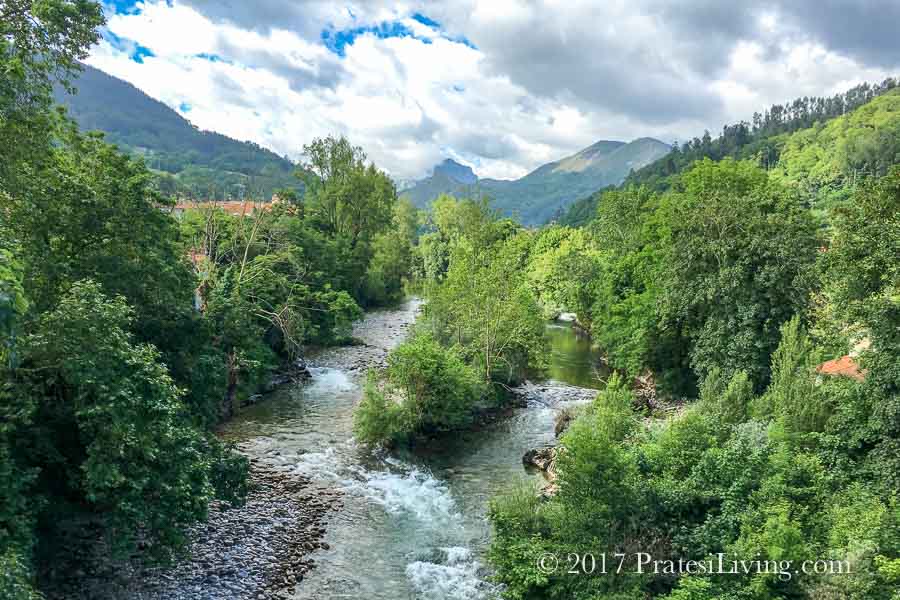
View of the Sella River
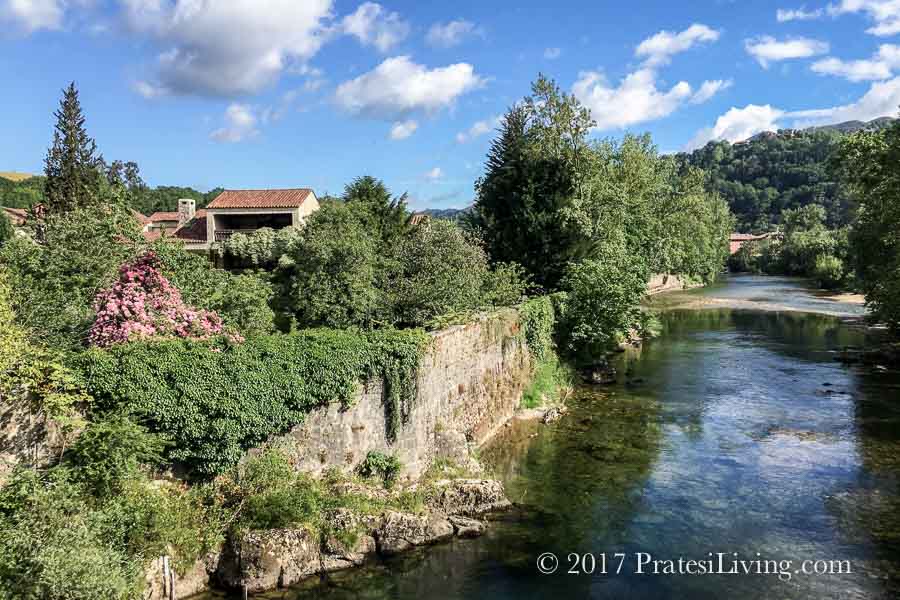
Another view of the Sella River from the bridge
At Covodonga we wandered through the natural cave, which is home to the image of Our Lady of Covodanga, known in Asturias as “La Santina” and the tomb of Don Pelayo, who led the victory of the 8th century battle known as the Battle of Covodonga, which is recognized as the beginning of the Christian reconquest of Spain. We could hear music as we headed towards the end of the cave and discovered there was a church service in the Chapel of Our Lady (Virgen de las Batallas). There was something mystical about the whole experience. And then, the setting for the Basilica of Covodonga, with its tall twin towers overlooking a cliff set against the backdrop of the mountains, was spectacular.
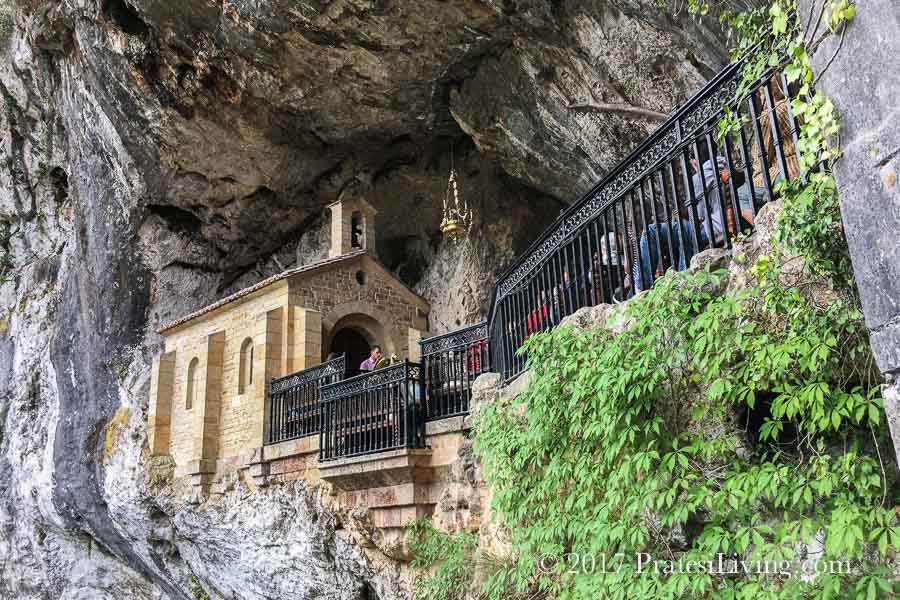
Natural cave church
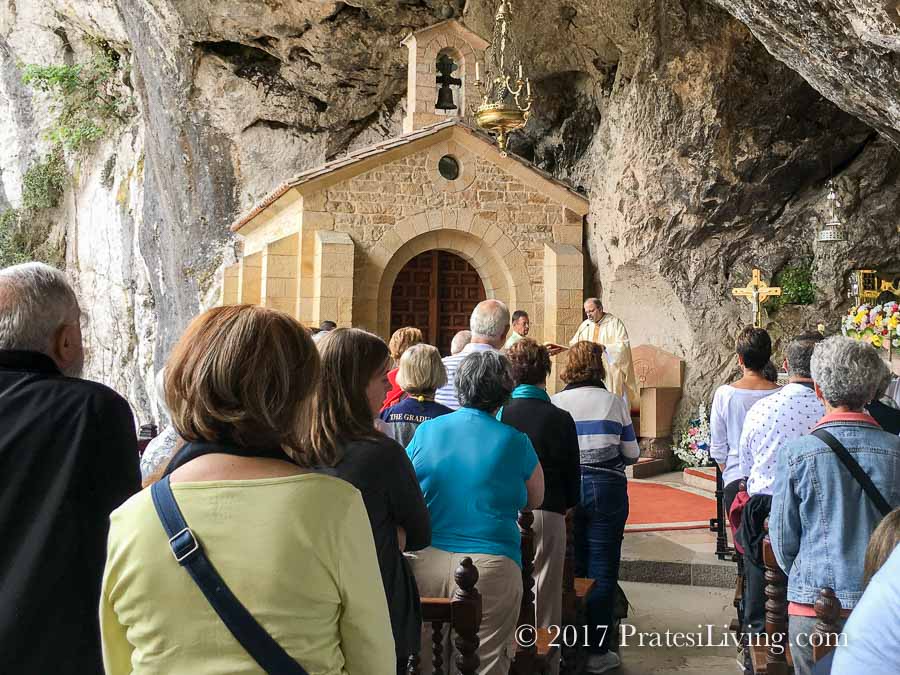
Service at the Chapel of Our Lady
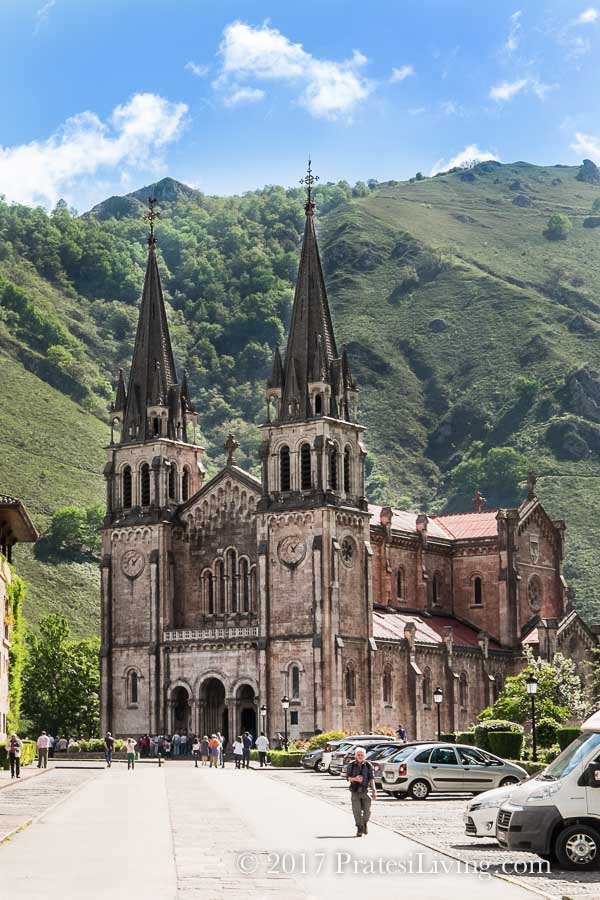
Basilica of Covodonga
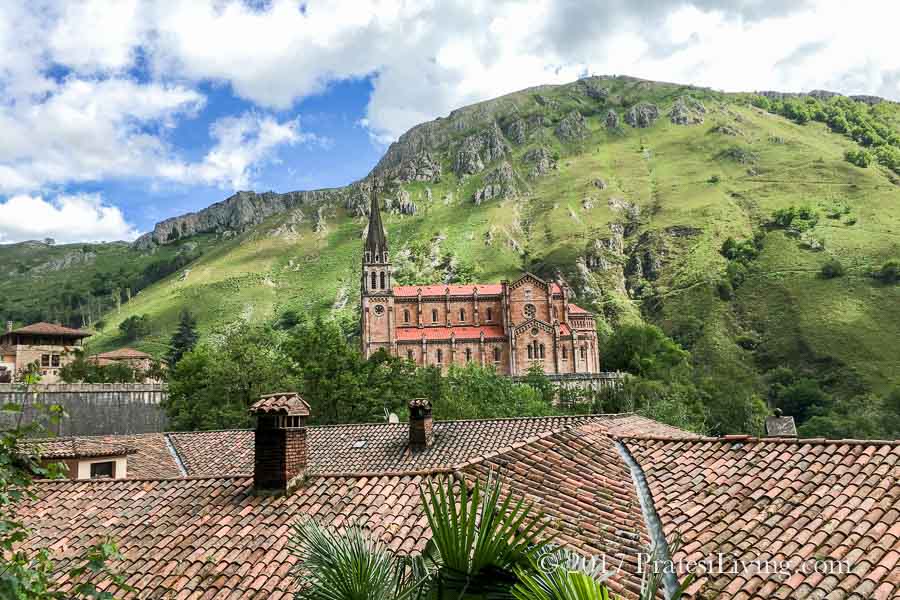
Basilica of Covodonga in the distance
Port of call – Bordeaux, France
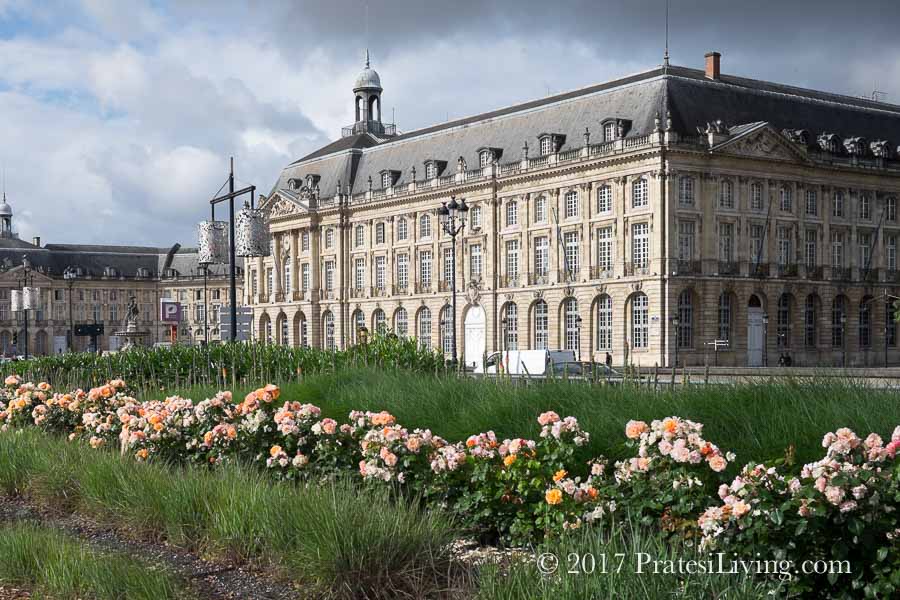
The city of Bordeaux
If you know great wine, then you probably are no stranger to this beautiful region of France. Our ship, the Star Legend, was able to dock right along the waterfront in the center of town on the Garonne River. It was an impressive way to begin exploring the city and the surrounding wine region.
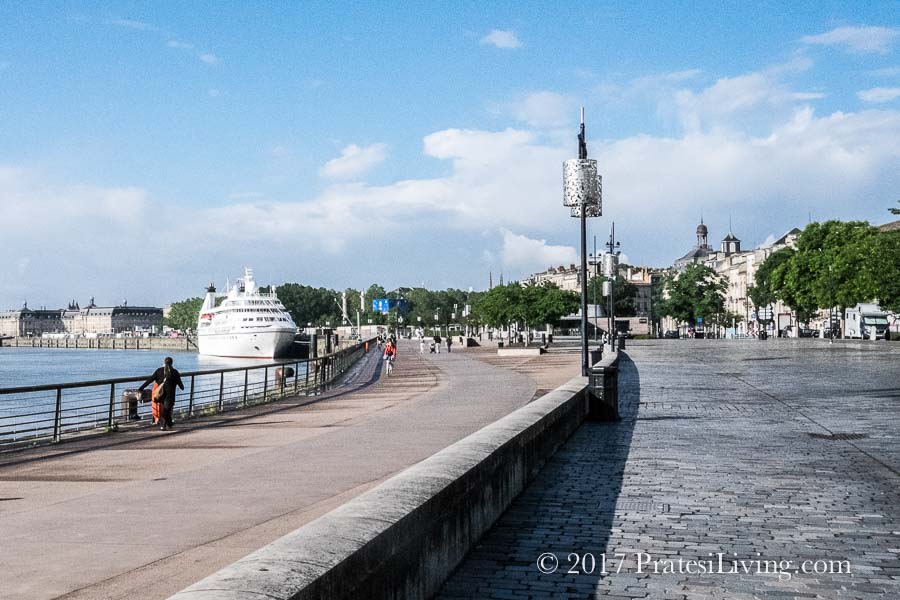
The Star Legend docked in Bordeaux on the Garonne River
Bordeaux offers much of what you’d expect in a large European city: fabulous dining, museums, cathedrals, history, upscale shopping, stunning architecture, and of course, extraordinary wines. We were in Bordeaux two days. During that time, the city was host to the European soccer games, so the streets were filled with visitors dressed in their country’s team gear. The pubs and bars were spilling over with boisterous fans watching the games. There was also a fan station in a park across from our ship, so it was quite the spectacle.
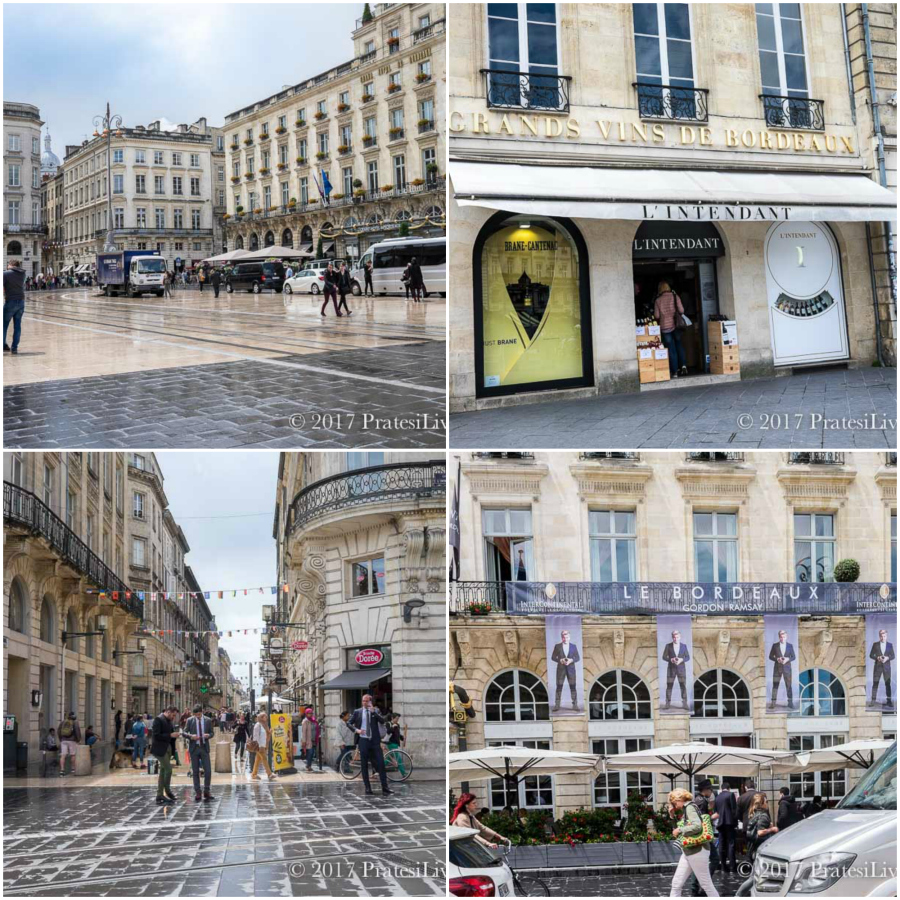
The streets of Bordeaux
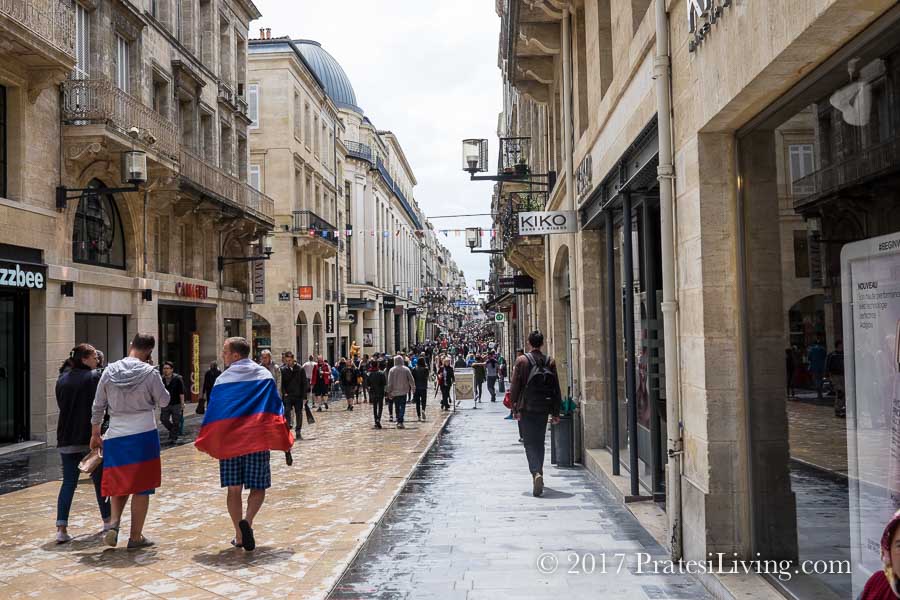
Soccer fans
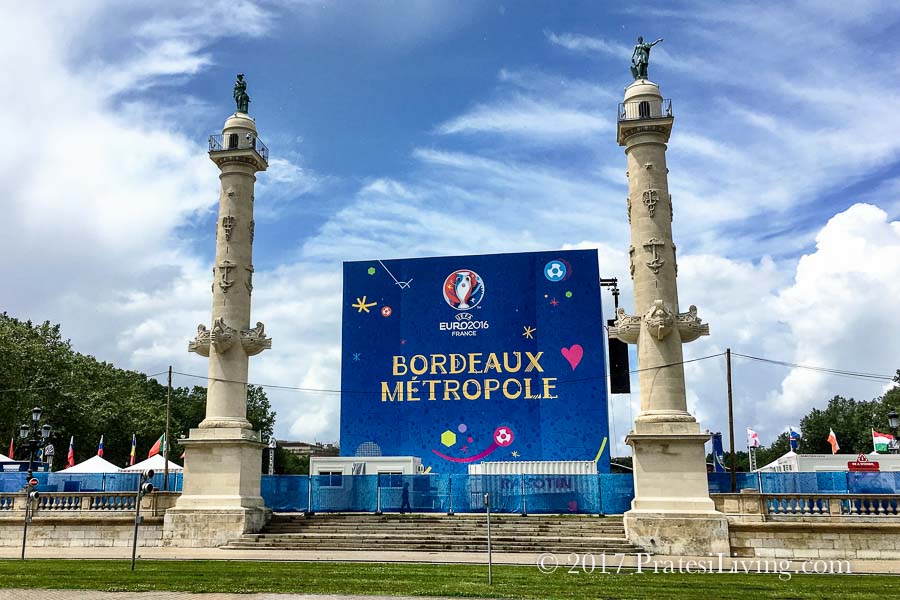
Fan park
One of the highlights of this visit was the evening private event for the entire ship, Bordeaux: A Perfect Blend. All of the guests were driven by bus to a beautiful chateau in the Medoc region, Chateau Kirwan. Here we sampled wines, passed hors-d’oeuvres, and local Marennes-Oléron oysters, while listening to music that filled the chateau and vineyard.
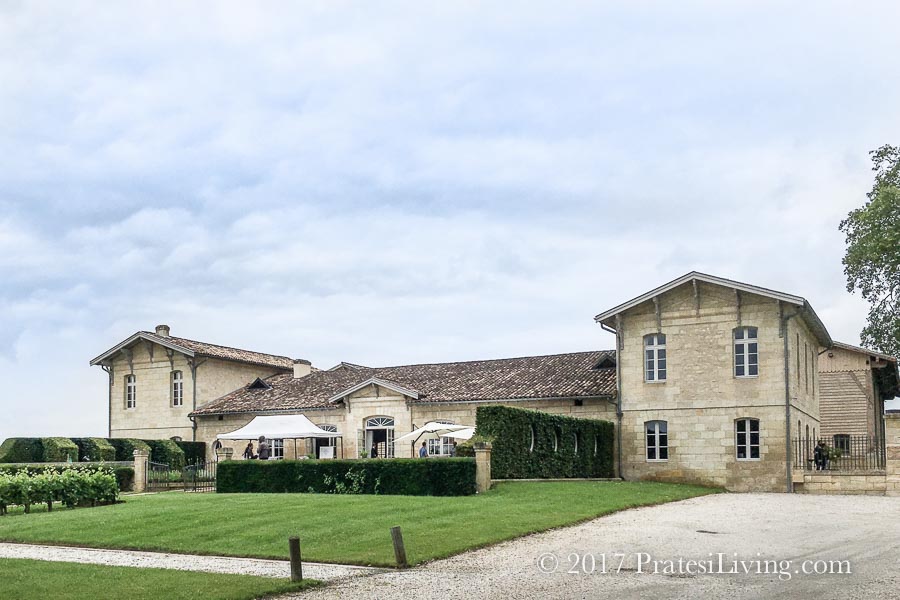
Chateaux Kirwan
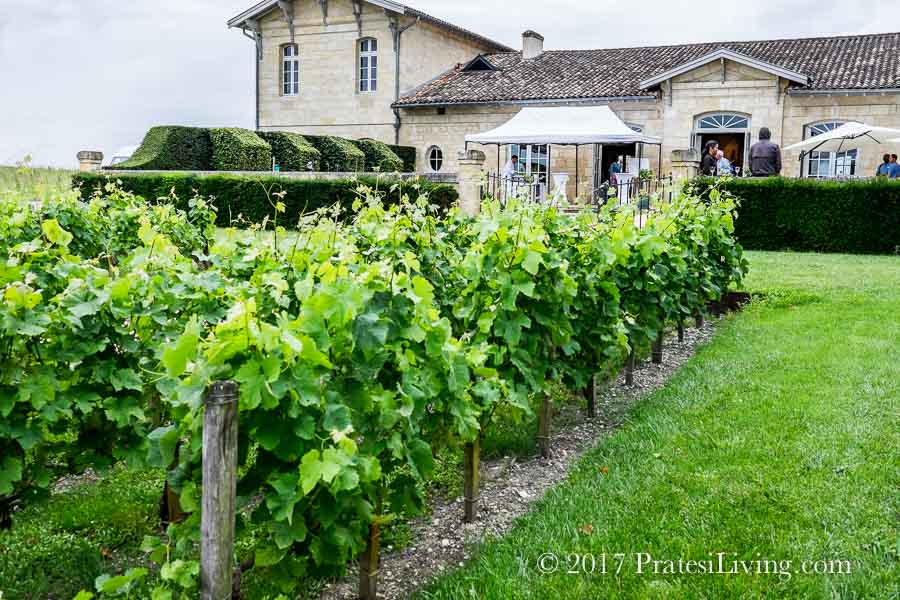
Vines at the chateaux
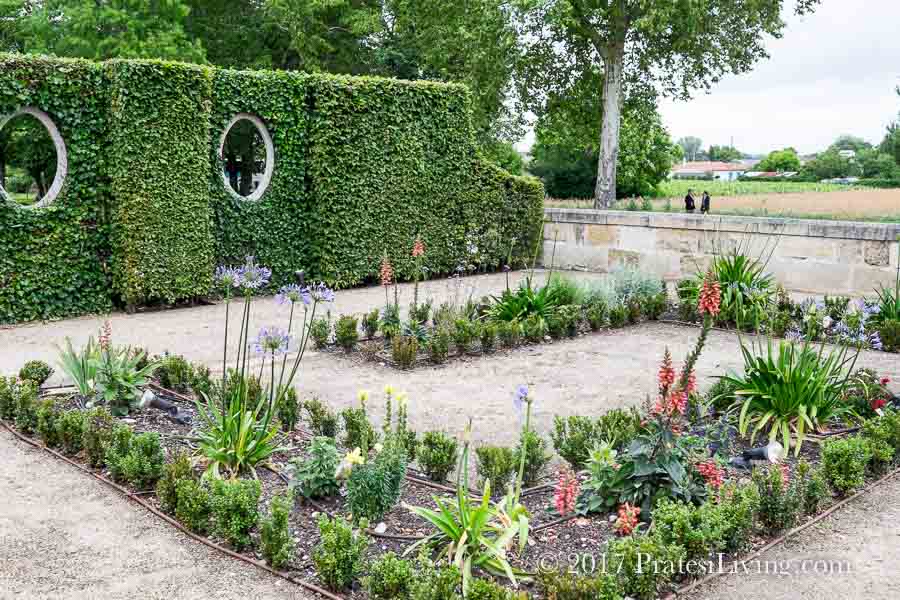
Courtyard
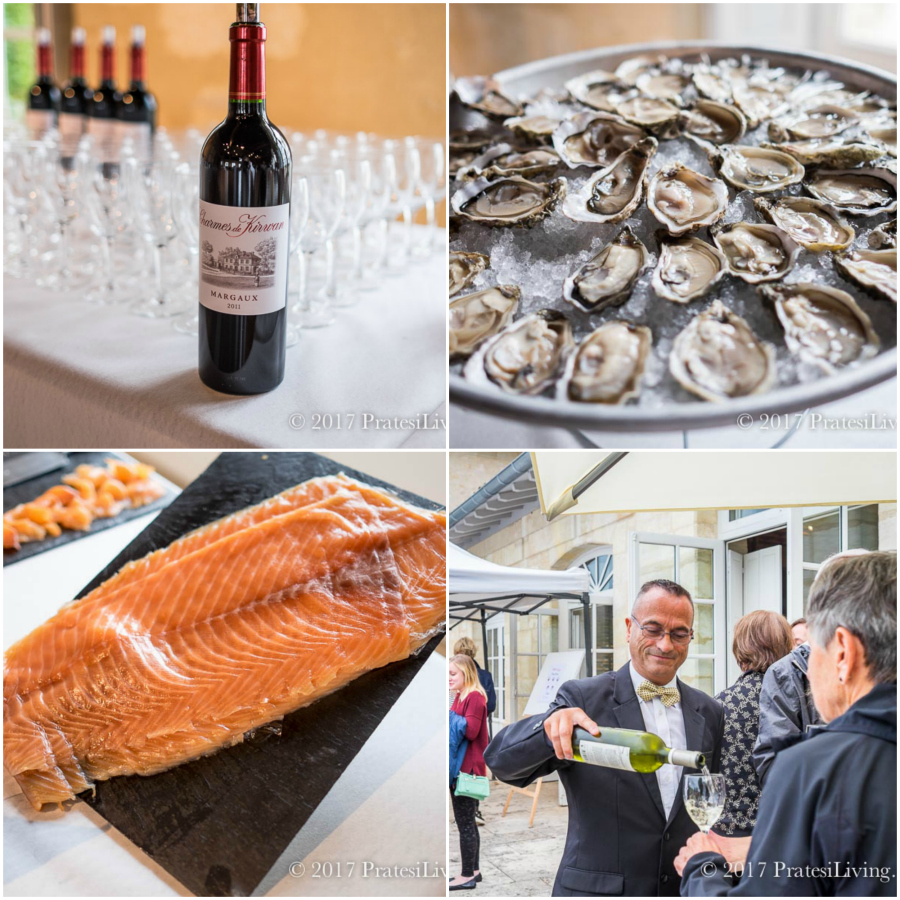
Chateau Kirwan
Another highlight of Bordeaux was the opportunity to visit the newly opened La Cité du Vin (or city of wine). This is an immersive experience into the wine culture of the world. The museum is geared more toward a general audience (as an oenophile or sommelier may find the information more basic), regardless, everyone will appreciate the unique architecture of the museum. You can spend all day learning about the “drink of the Gods” and sniff, taste, watch, and read your way through several floors of interesting exhibits, films, and discussions by winemakers from around the globe. End with a wine tasting on the 7th floor at Le 7 panoramic restaurant, which offers an exceptional view over Bordeaux and a list of over 500 wines from around the world. If you liked the wines you tried upstairs, you can purchase several bottles to take home from their wine store on the first level.
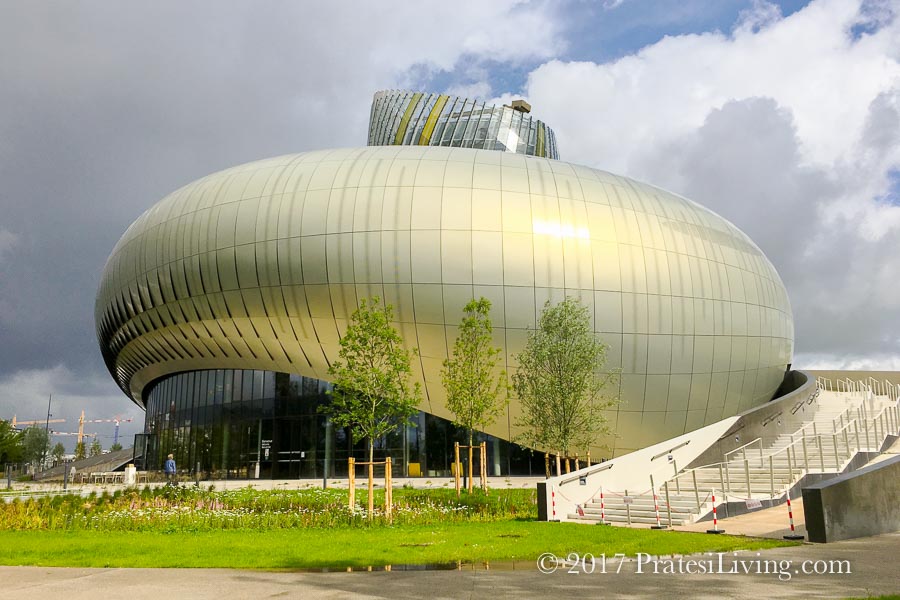
La Cité du Vin
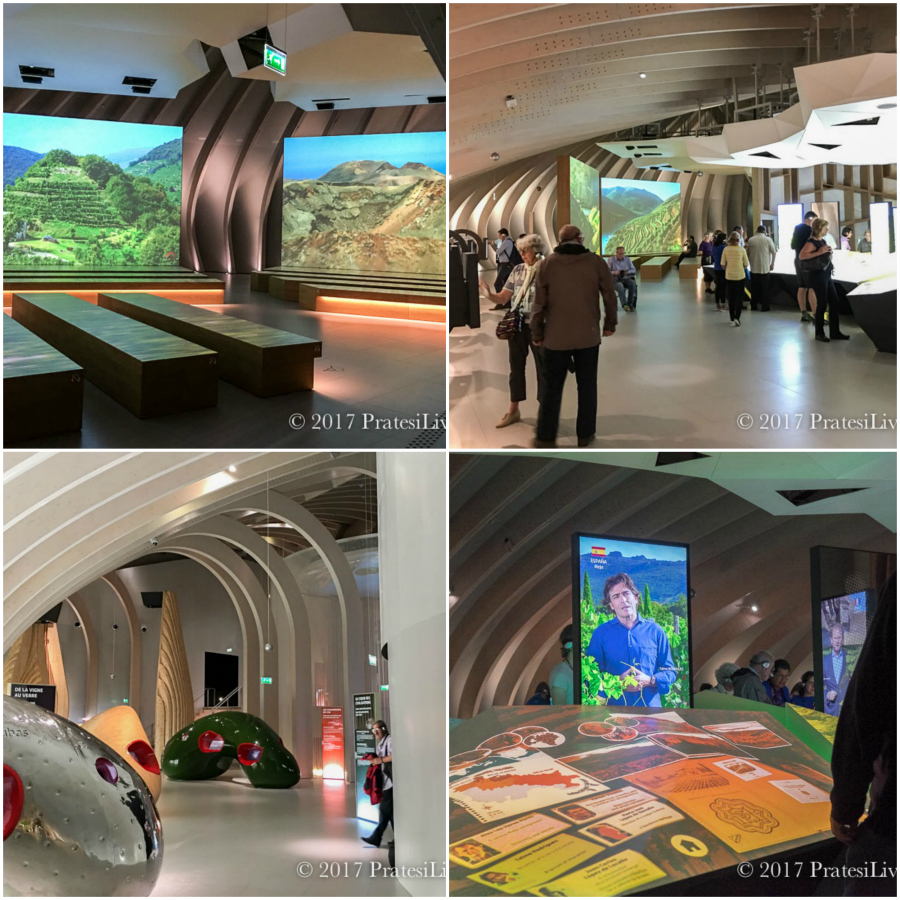
La Cité du Vin
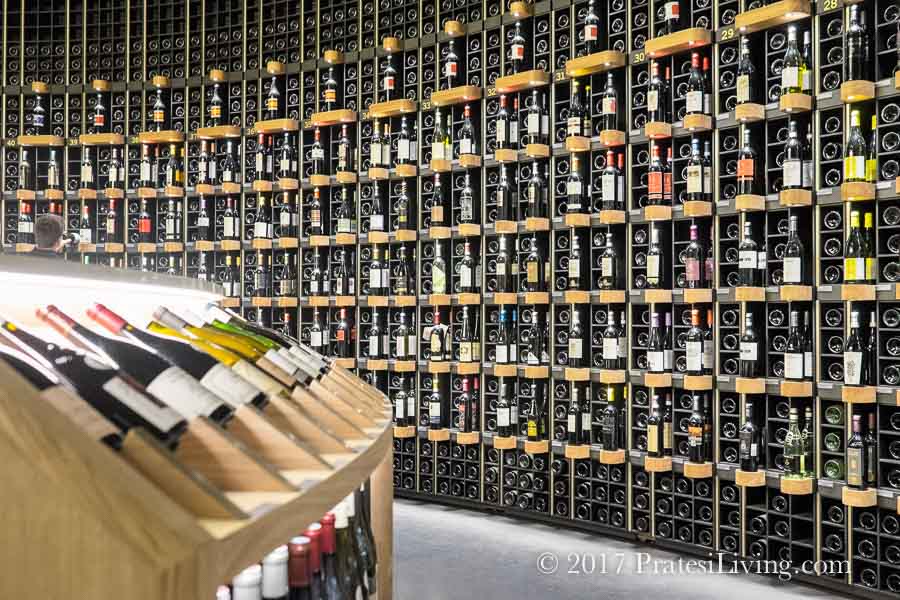
Wine shop at La Cité du Vin
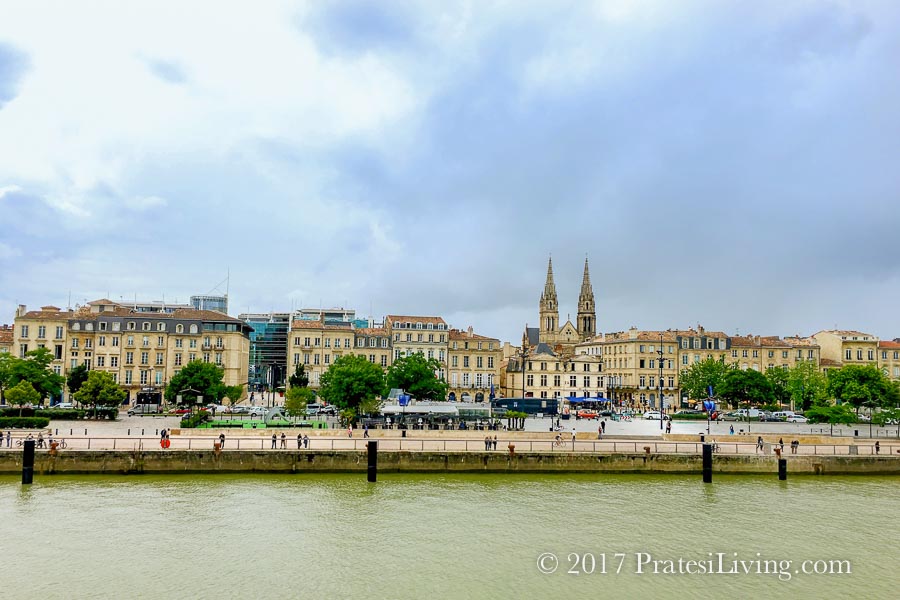
Sailaway from Bordeaux
Port of call – La Rochelle/La Palice, France
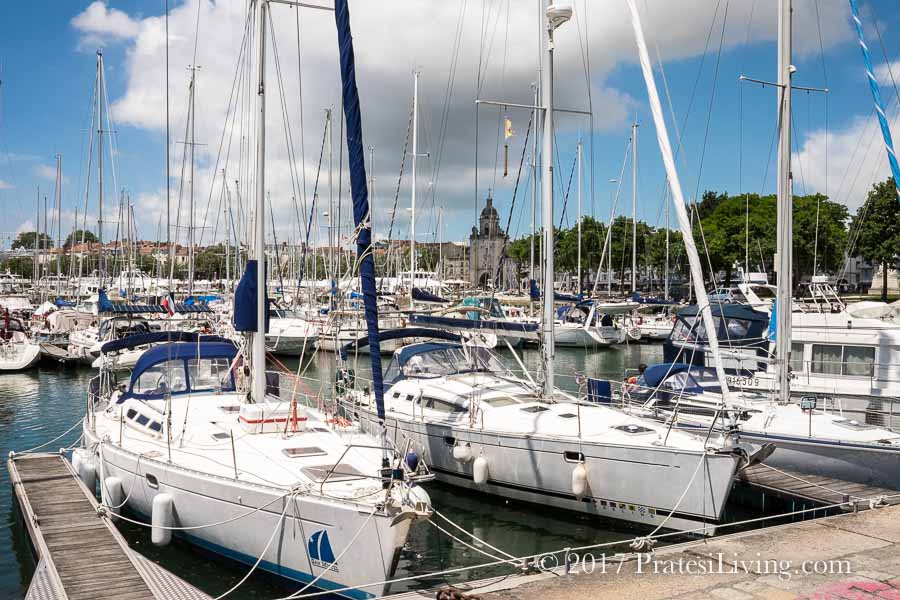
The harbor at La Rochelle
The picturesque port town of La Rochelle is charming with its harbor filled with beautiful sailboats, limestone buildings with terracotta rooftops, the 14th century stone towers at the entrance to the medieval city, and cafés lined around the waterfront serving fresh seafood and oysters the region is known for.
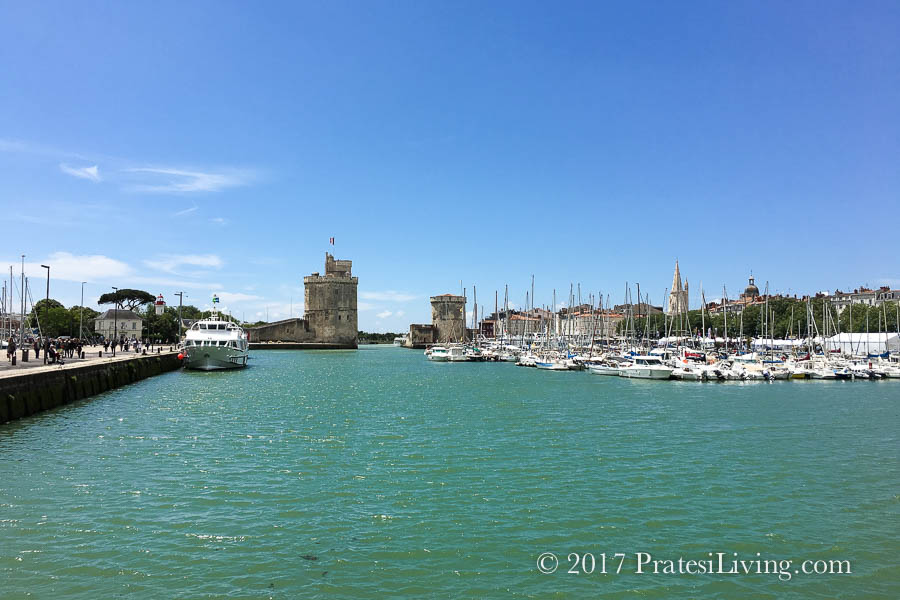
Port of La Rochelle
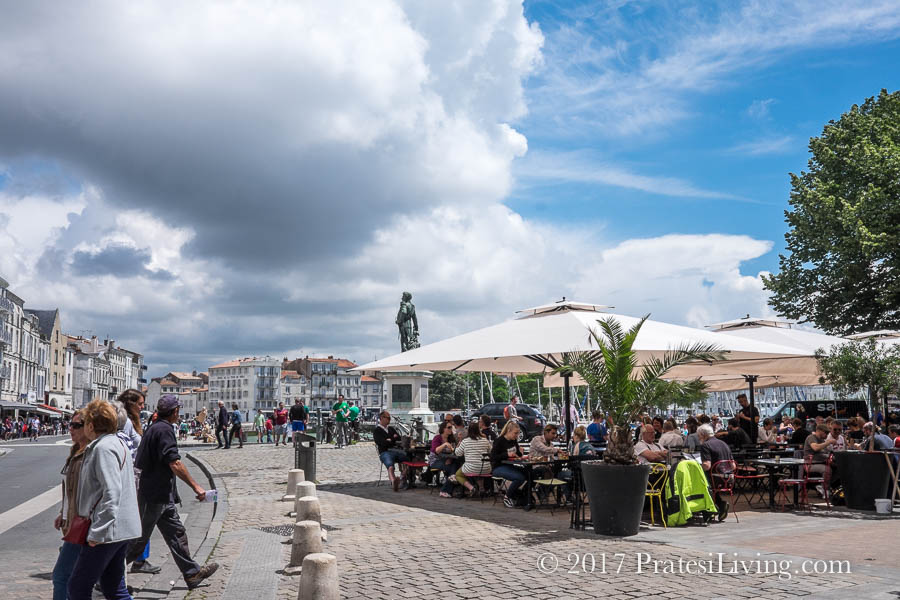
Cafés along the harbor
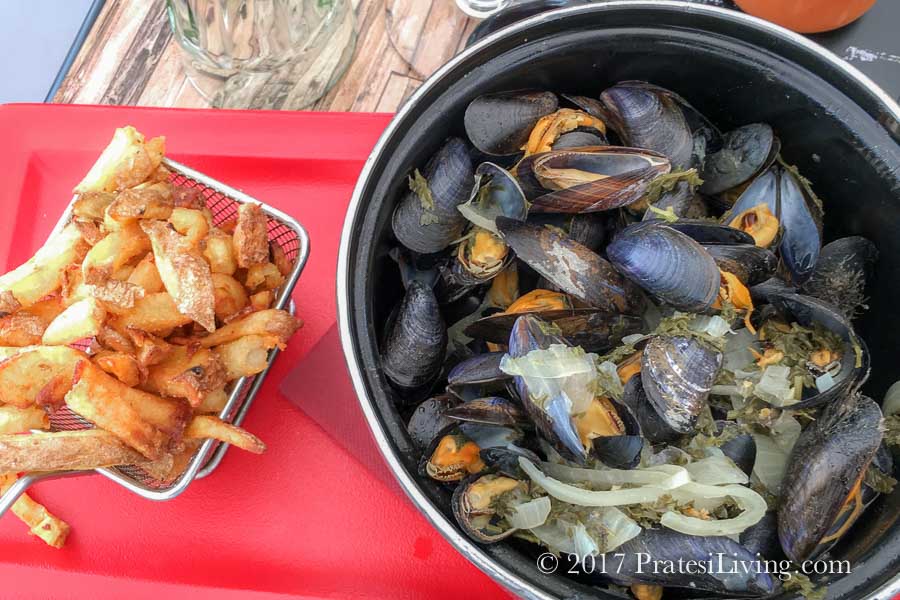
Mussels and frites
A visit to this lively town was one of the stops during our excursion, along with a tour to the quaint village of Brouage. Formerly a salt capital, this walled village, guarded by a military fortress, was a seaport in the 16th century, but now is now two miles from the sea and surrounded by the marshes. Samuel de Champlain, the Founder of “New France” or Quebec, claimed that he was from this small village in a book he wrote in 1603.
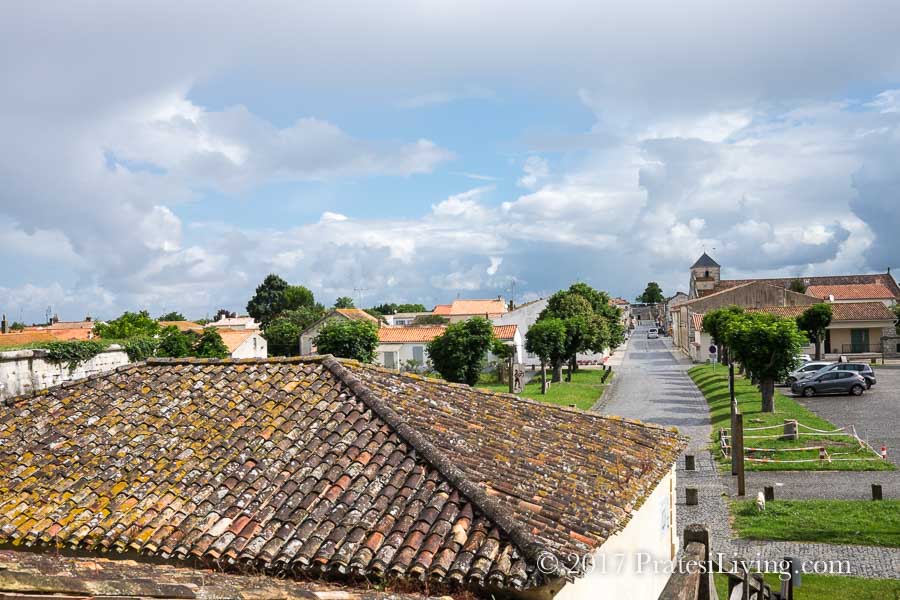
View of the village from the top of the wall
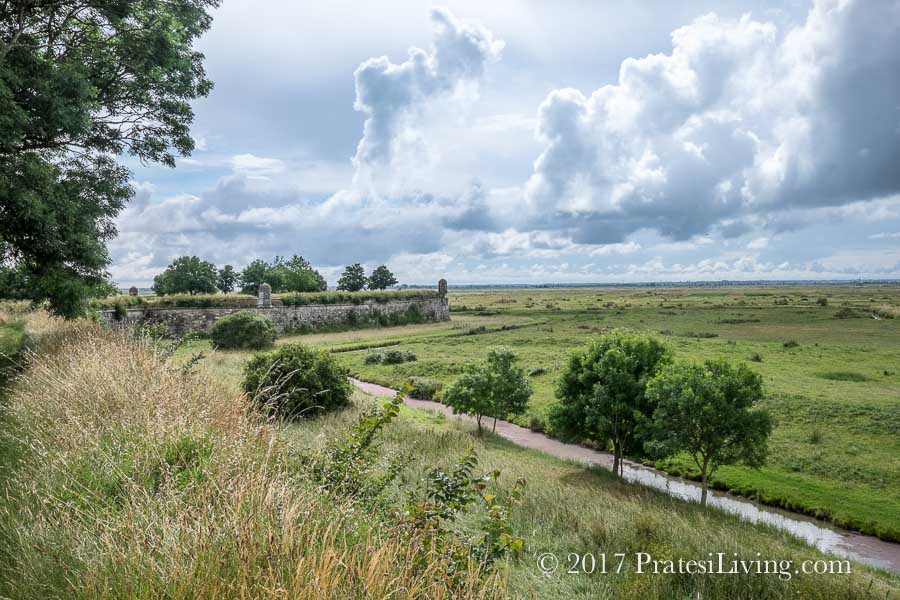
The marshes now surround the village
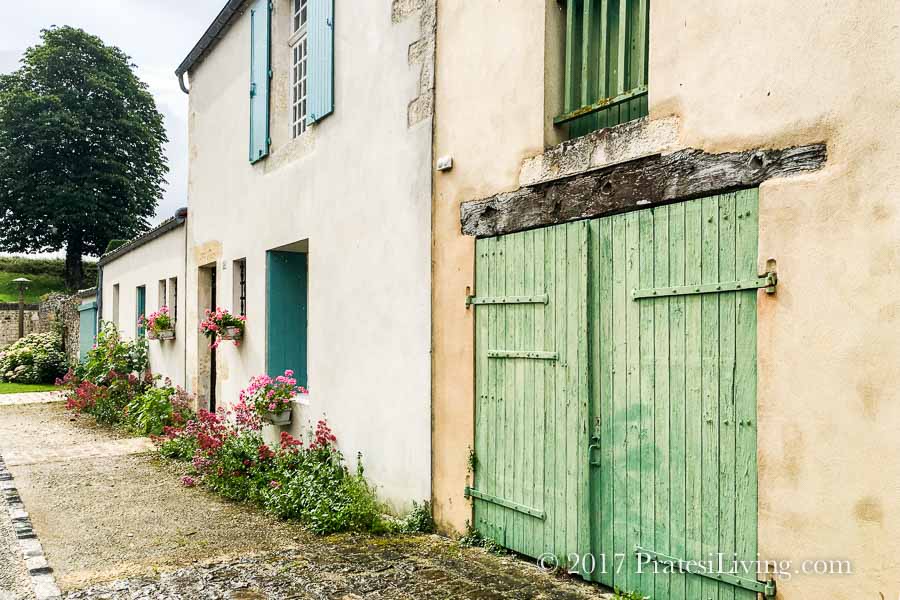
Scenes from Brouage
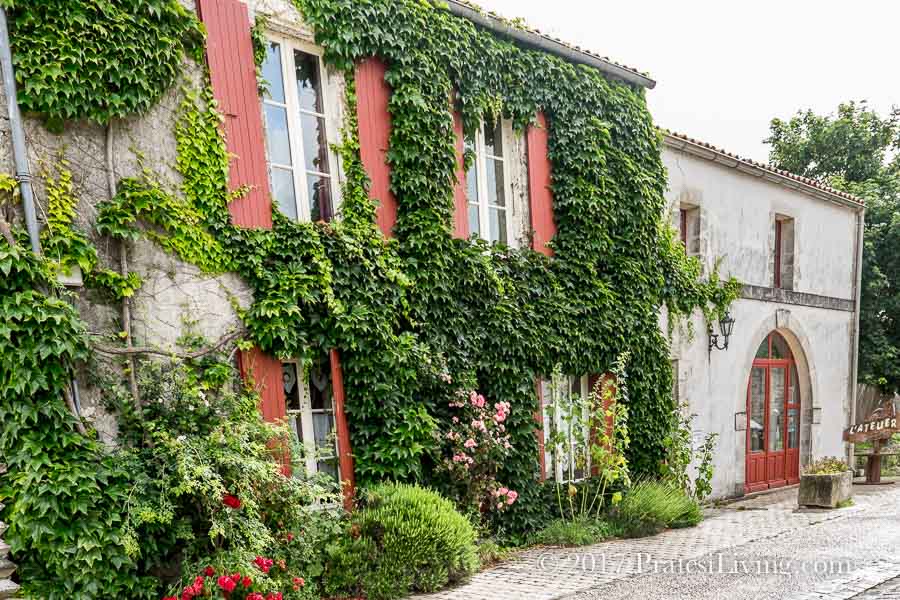
It was a charming little village
A short distance away, we visited Marennes and what is known as Oyster City, where the famed Marennes-Oléron oysters are grown and harvested. This is the largest region for cultivated oysters in Europe producing over 100 million pounds of oysters each year. We listened to one of the older oyster farmers at a local oyster museum, tell us what it was like years ago to grow oysters in the region and how times have changed. He explained the challenges caused by the combination of the remnants of salt mining, changes in the sea level and climate (which has created more brackish water and forced change), and the innovations they’ve had to implement in order to continue their business. That may be why these oysters are particularly briny.
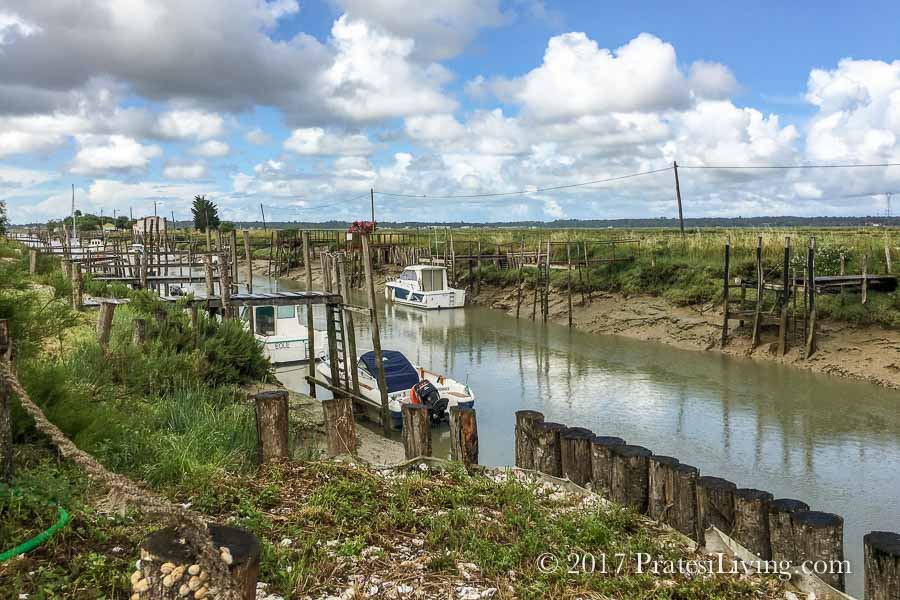
The Cayanne Canal – Marennes
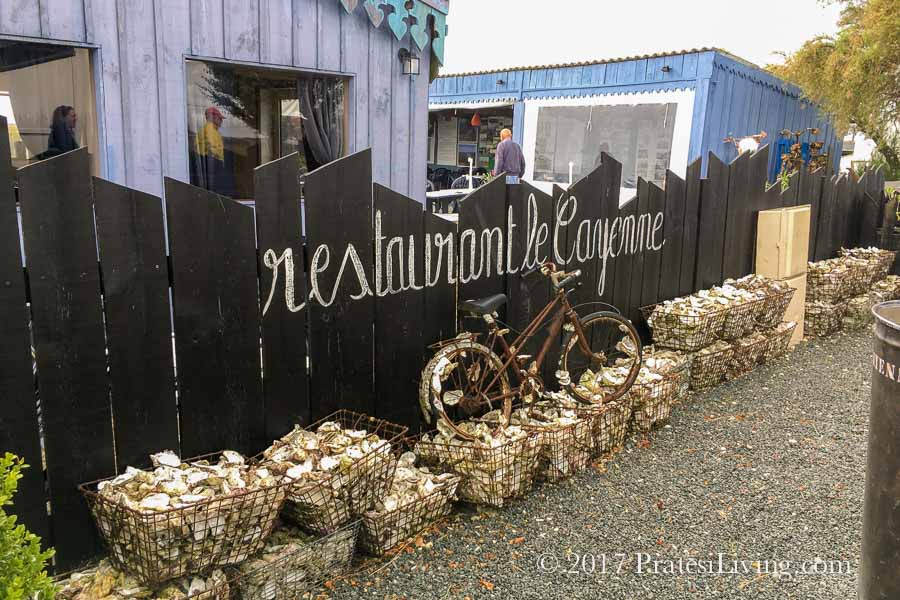
Restaurant Cayenne
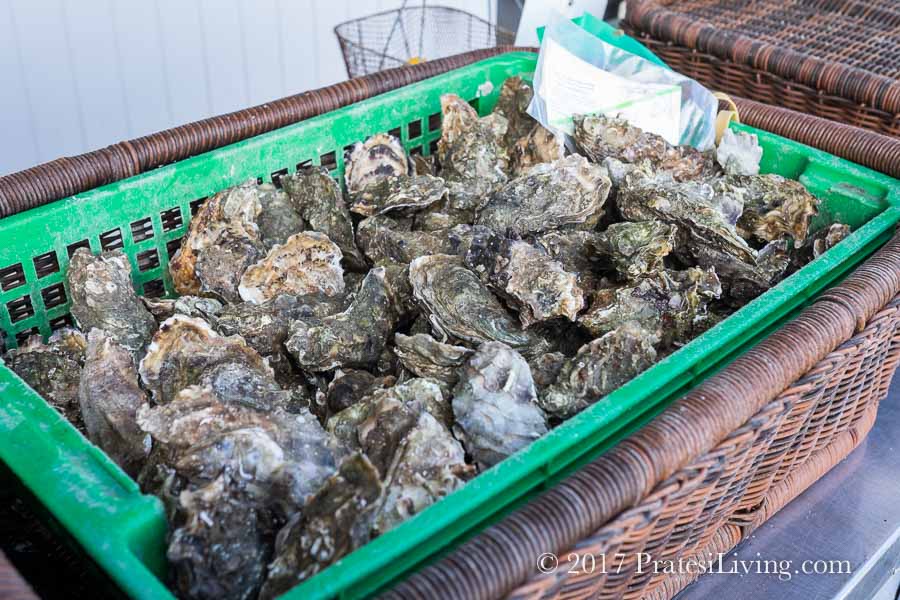
The famed Marennes-Oléron oysters
This gentleman, who spoke only French, cried at one point as he talked about his years as an oyster farmer. We had a translator, but even without understanding his language, you could see the struggles over the years in his expression and hear the frailty in his voice. Afterward, we tasted the fruits of his labor with great appreciation for the history of this region and sipped a simple crisp white wine that paired nicely with the brininess of the oysters.
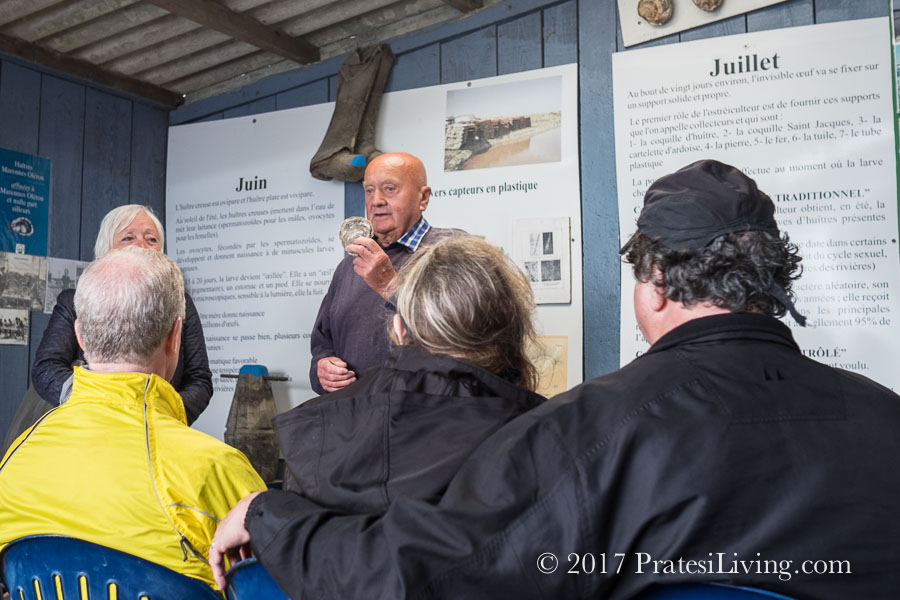
Local oyster farmer
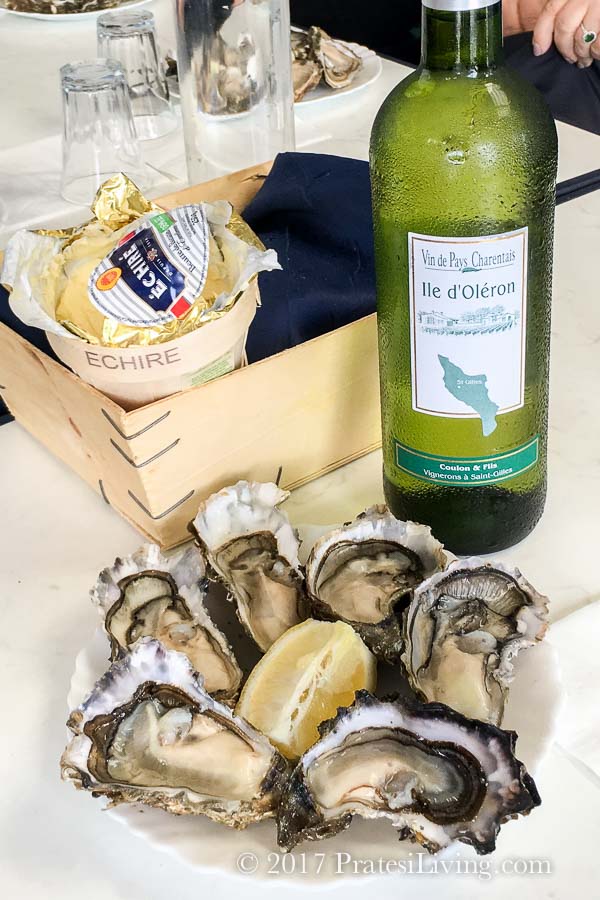
Sampling of oysters and wine
Port of call – Saint-Malo, France
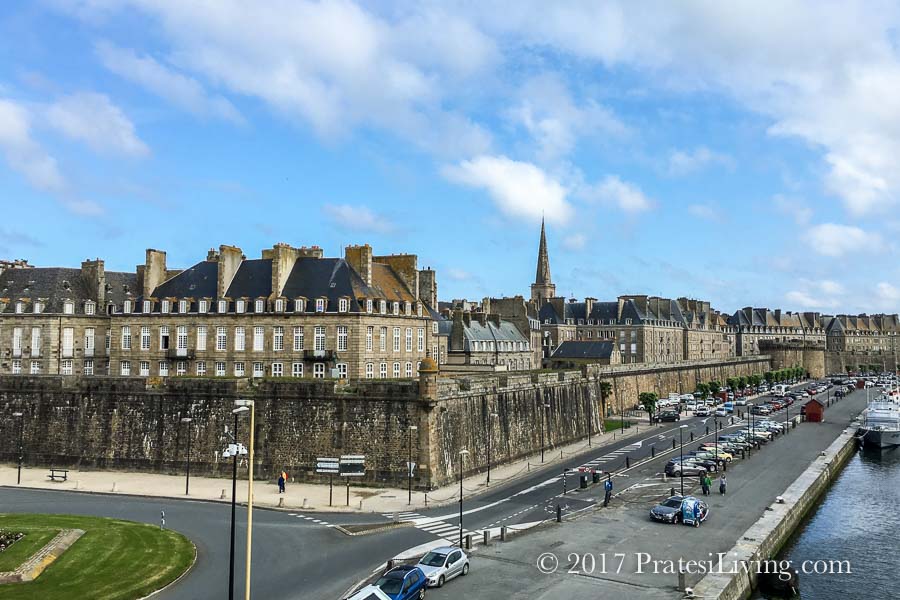
View of Saint-Malo from the ship
Step back in time to the ultimate French seaside vacation town you’ve always dreamed of or read about in novels. Cool and brisk breezes blowing in off the English Channel, women strolling along the streets with their parasols and extravagant hats, quaint little cafés serving local fresh seafood and crepes with chilled white wine, and umbrellas being set up along the beach anticipating swimmers and tourists as the heat of the day begins to rise. This was everything I had ever imagined and what came to life while visiting the coast of Brittany.
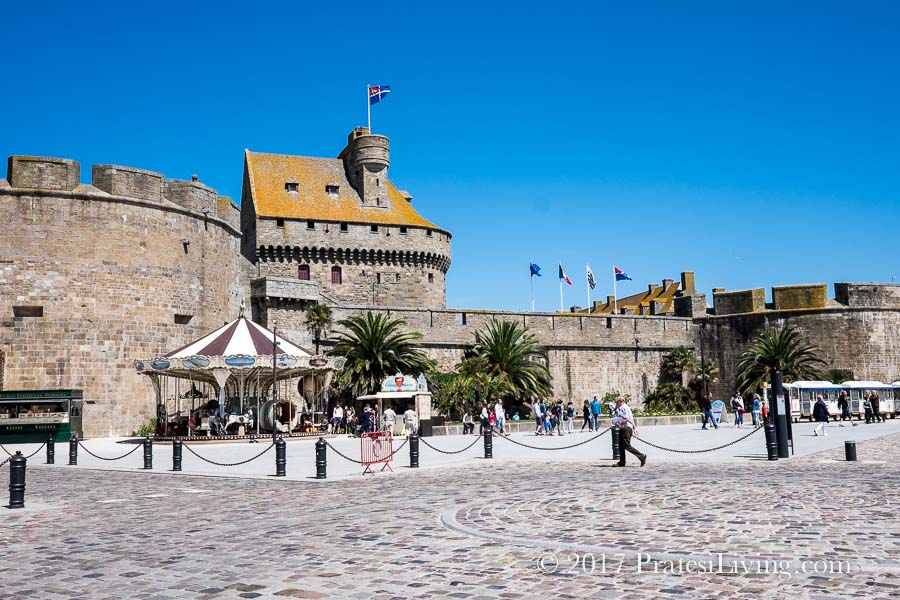
Carousel outside the city
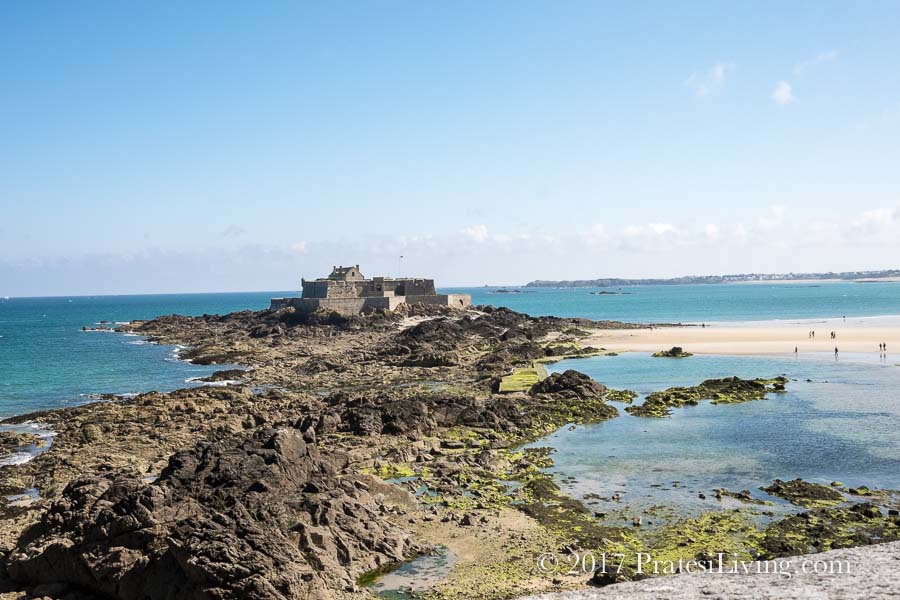
Saint-Malo fortress at low tide
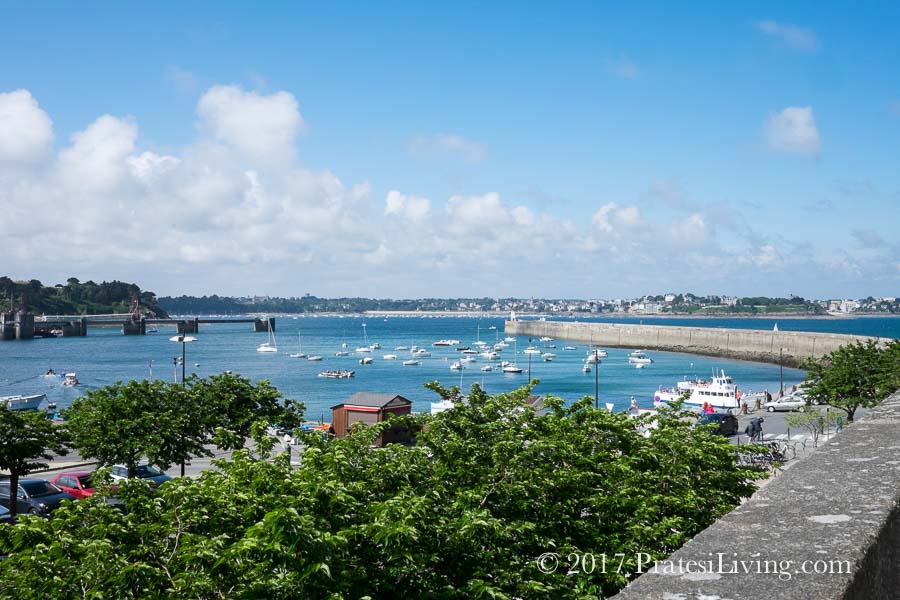
View of the harbor from the protective wall
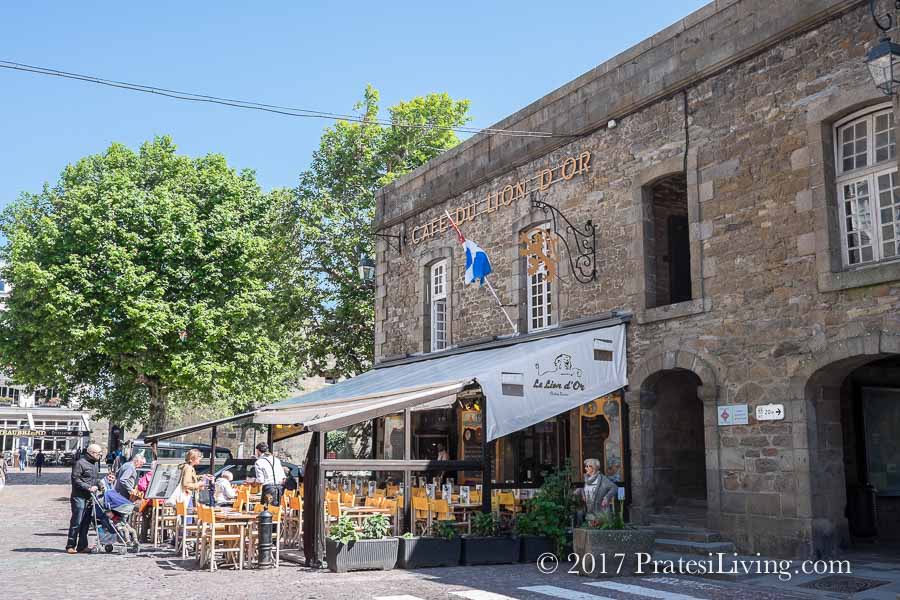
Café in Saint-Malo
Looking out at the spectacular walled city of Saint-Malo from our ship, which was docked just feet away, was the perfect way to end our cruise before setting sail for Dublin. We opted to spend the day touring Saint-Malo on our own and combining that with a half-day tour to Canacle, another seaside town on Mont Saint-Michel Bay, known for their famous oysters, along with an oyster farm visit and tasting, rather than take a full-day excursion to Mont Saint-Michel. At least we could see the famed island and its iconic monastery in the distance from where we were. It was a tough decision. This cruise will offer many tough choices as there are so many opportunities for unique and wonderful excursions throughout the itinerary.
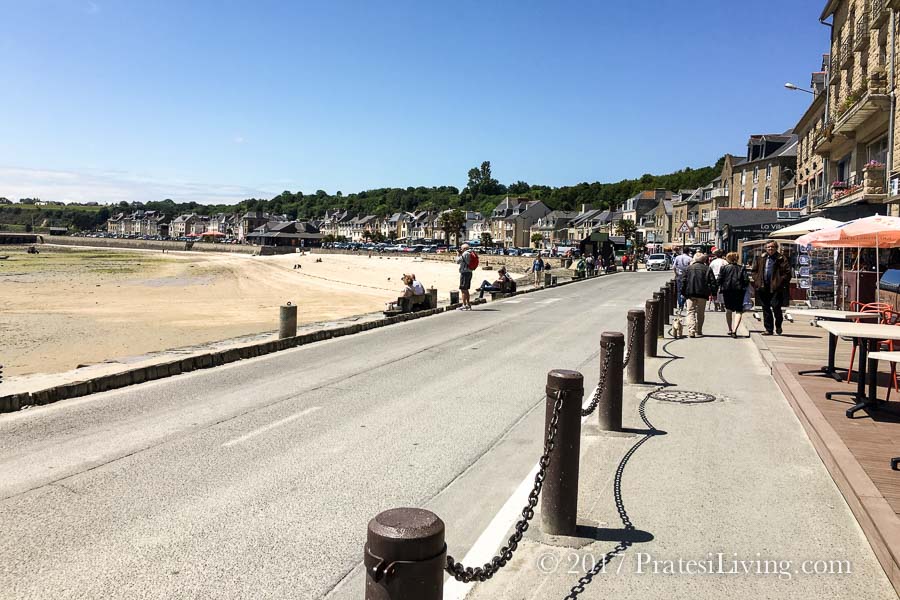
Cancale
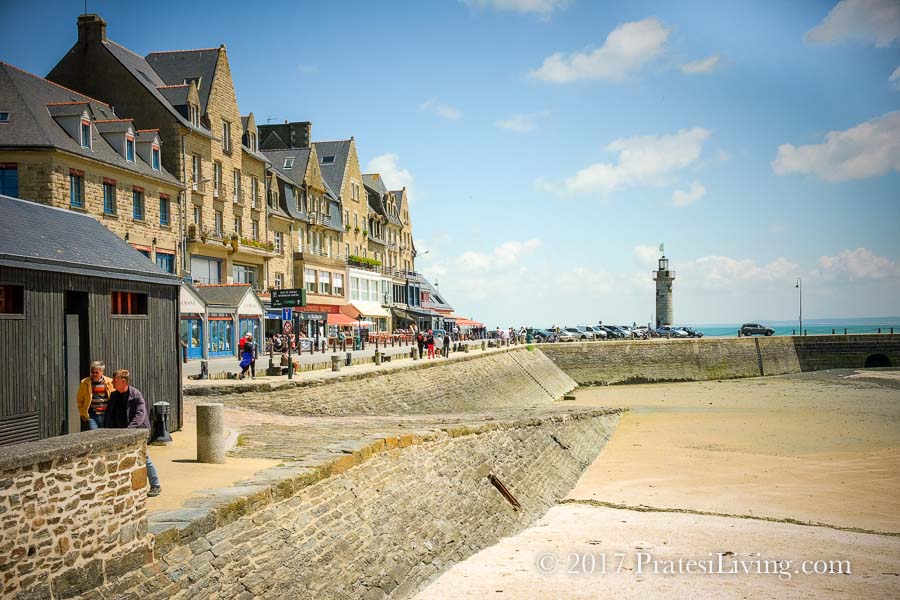
Cancale beach
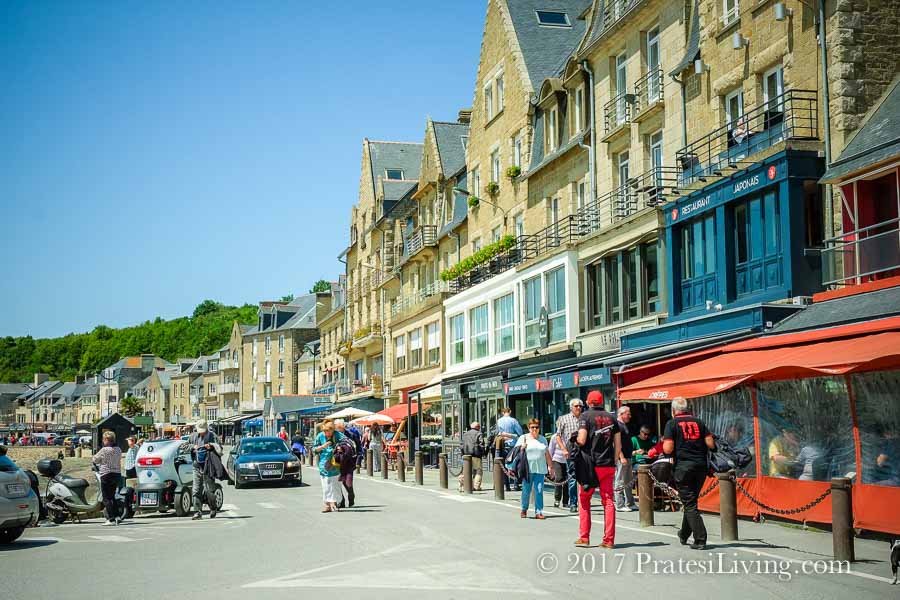
Colorful beach town
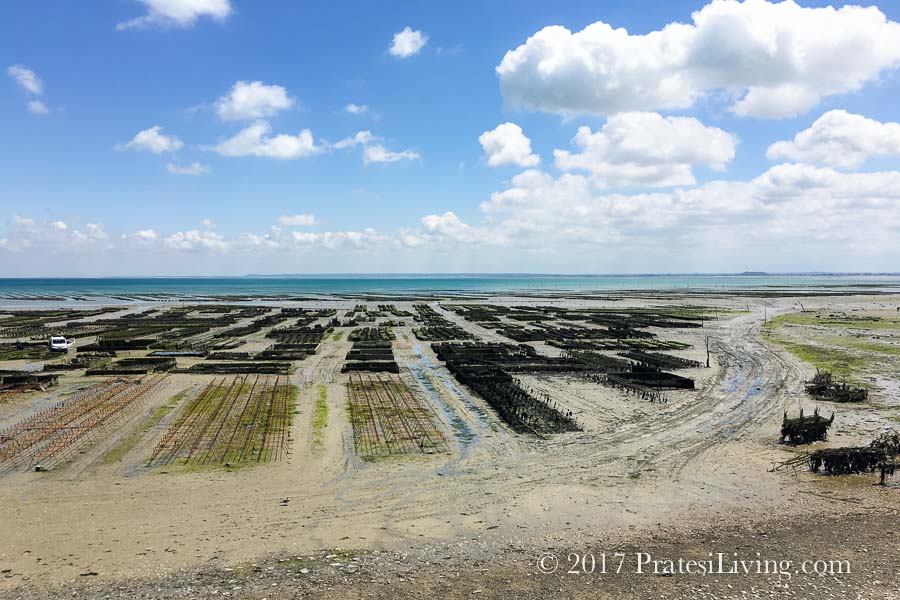
Oyster beds in Cancale on Mont Saint-Michel Bay
Walking along the wall of Saint-Malo and looking out over the English Channel, beaches, harbor, and city, we knew we’d made the right decision. The winds and temperature would change at every turn, with the volatile breezes coming in from the Channel, but the sun warmed up the day in both Saint-Malo and Cancale as we strolled the streets of both cities stopping for photos. We finished our time in these beautiful destinations by enjoying a lunch of traditional buckwheat crepes in Saint-Malo followed by local oysters and wine with newfound friends from our cruise later that day in Cancale.
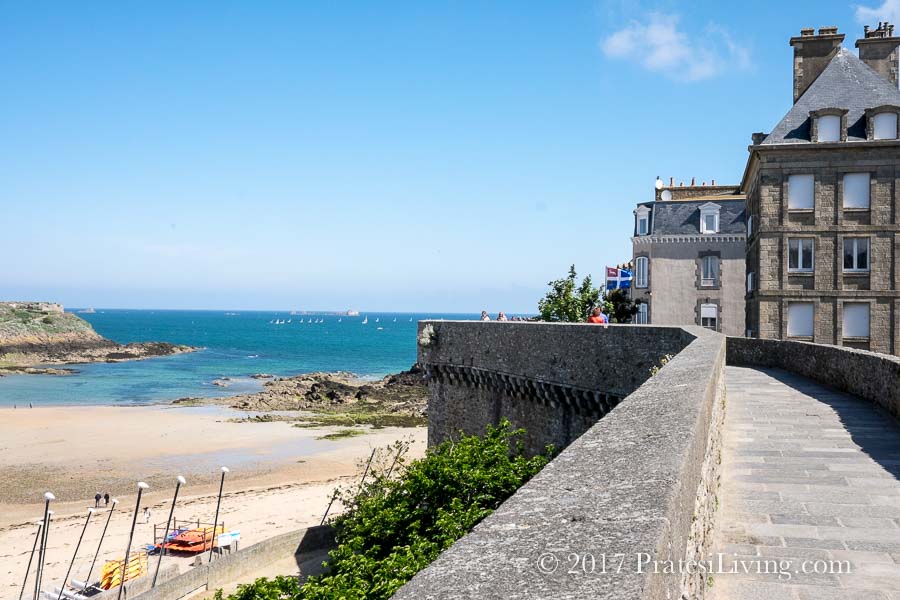
View from the top of the wall
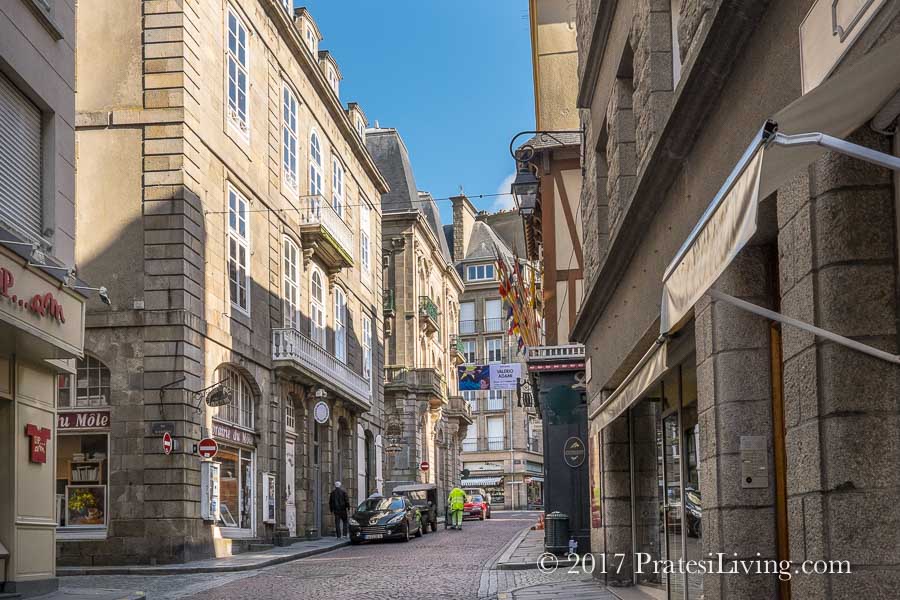
The streets of Saint-Malo
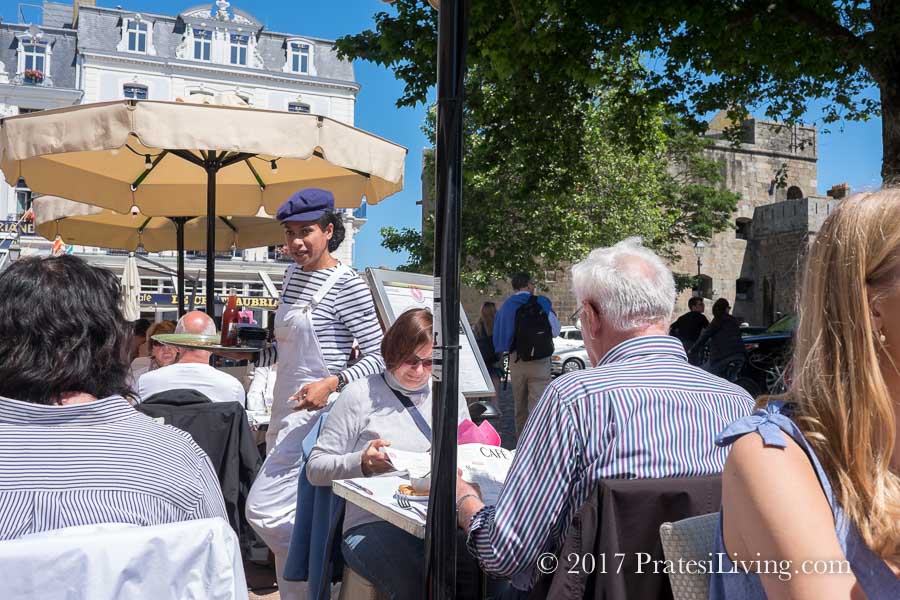
Lunch with a traditional buckwheat crepe
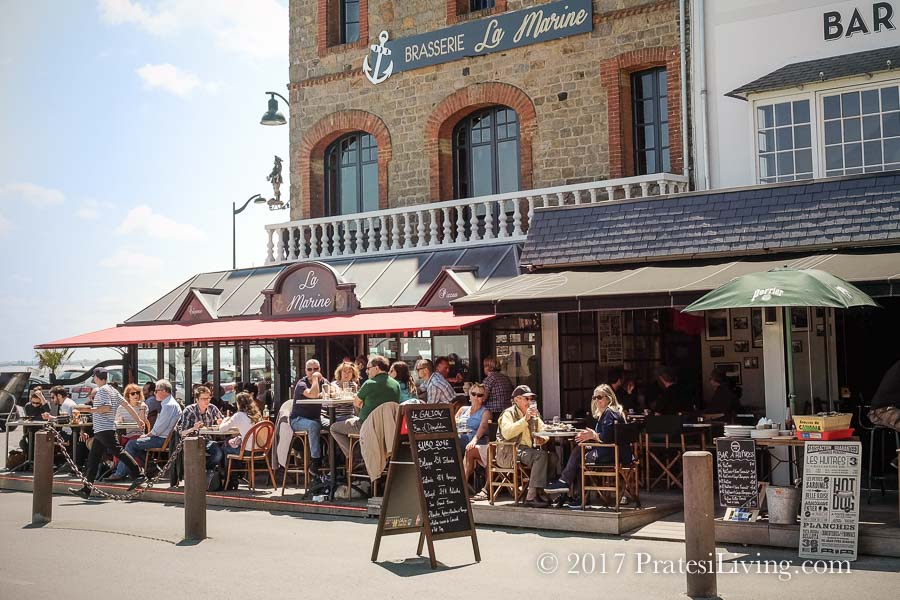
Café in Cancale
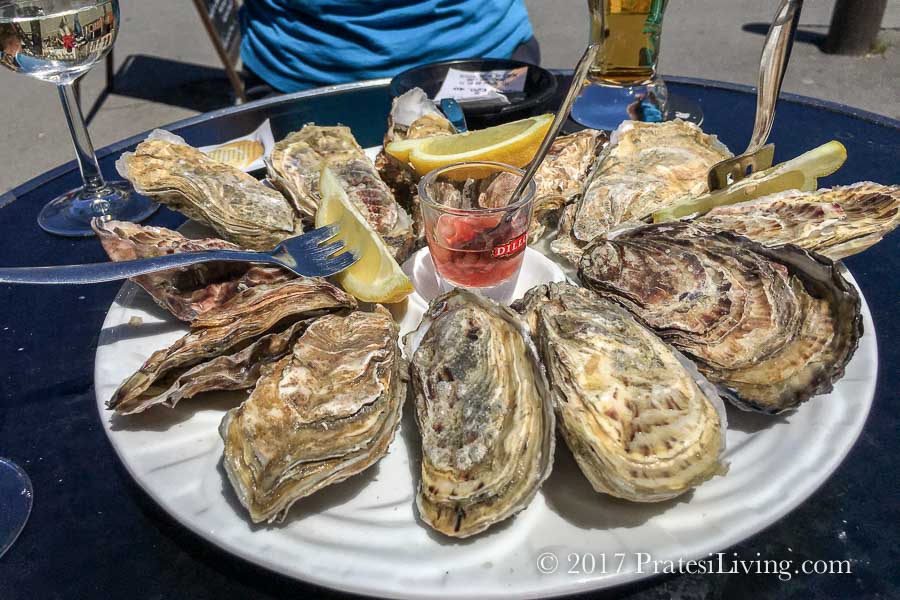
Cancale oysters
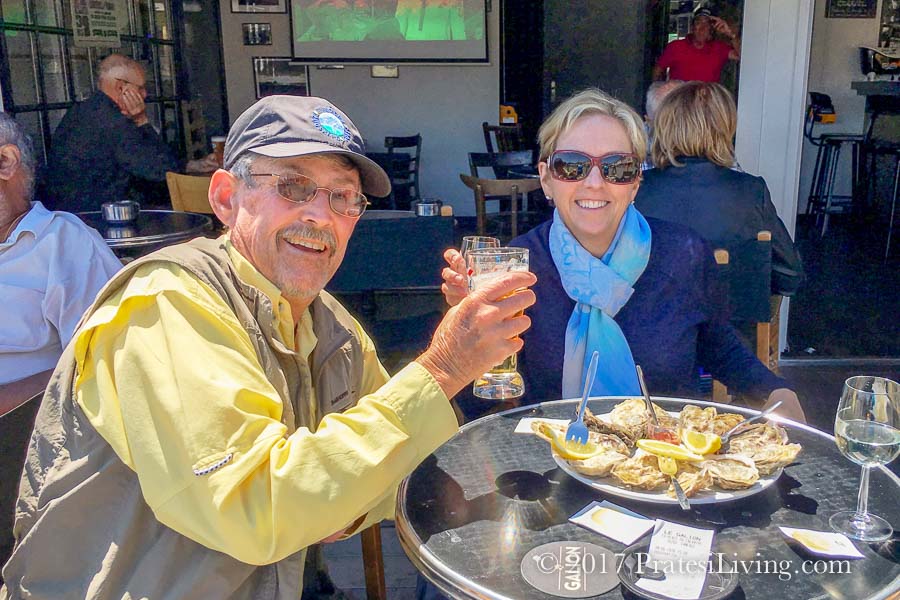
Oysters and wine in Cancale
Last port of call – Dublin, Ireland
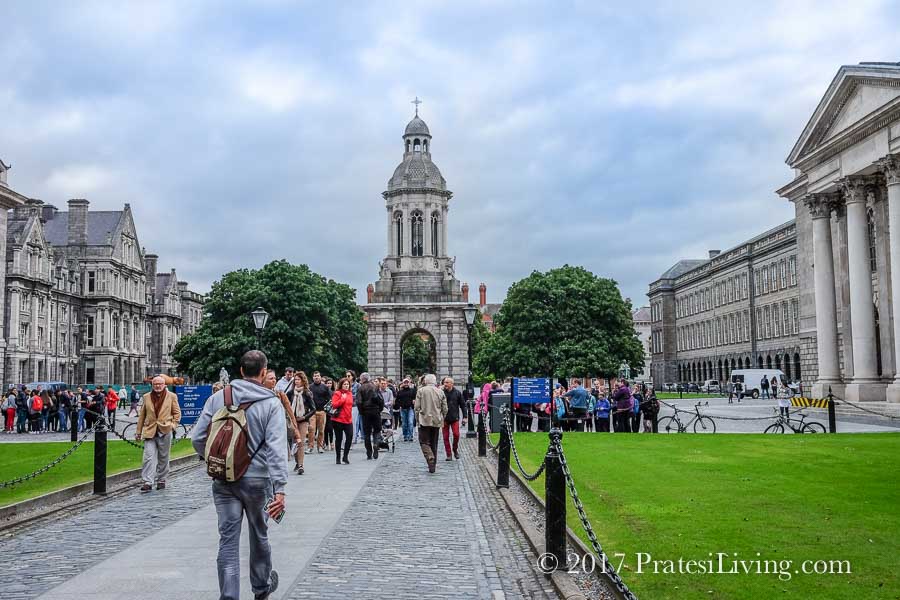
Trinity College
It was fitting to end the cruise in a city we fell in love with last year – Dublin, the lively capital of Ireland. During our one day stay we were able to take a tour around the city, visit the Temple Bar area for lunch and a pint of Smithwick’s, and enjoy an evening at The Marker Hotel and experience Chef Mullins’ delightful cuisine again before heading home.
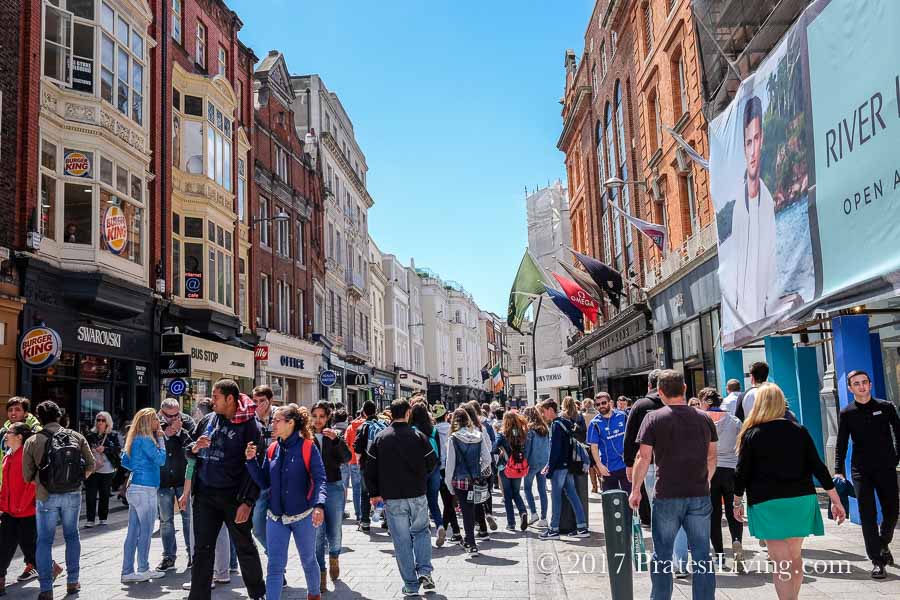
Shopping on Grafton Street
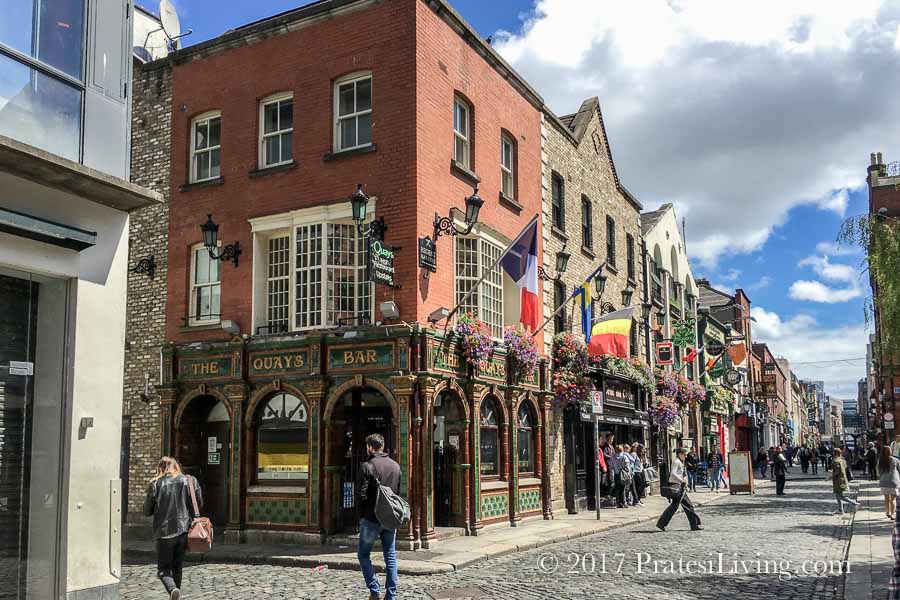
The Quay
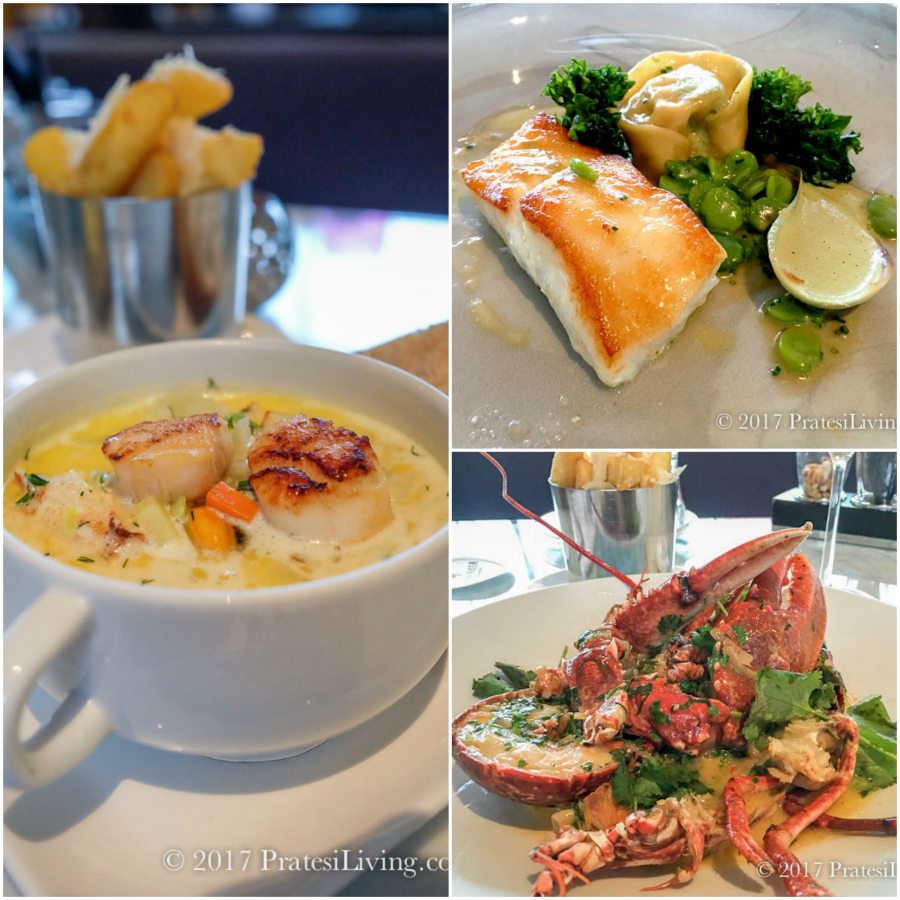
Dinner at The Marker Hotel
If you’re interested in learning more about Dublin, here are links to previous articles:
Chef Gareth Mullins – The Marker Hotel Dublin & His Recipe for Rack of Lamb
If you’re looking for a unique culinary cruise itinerary on a smaller ship that offers unusual excursions and ports of call and a trip you won’t soon forget, we highly recommend Cuisines & Cultures of Spain, Portugal & France with Windstar Cruises.
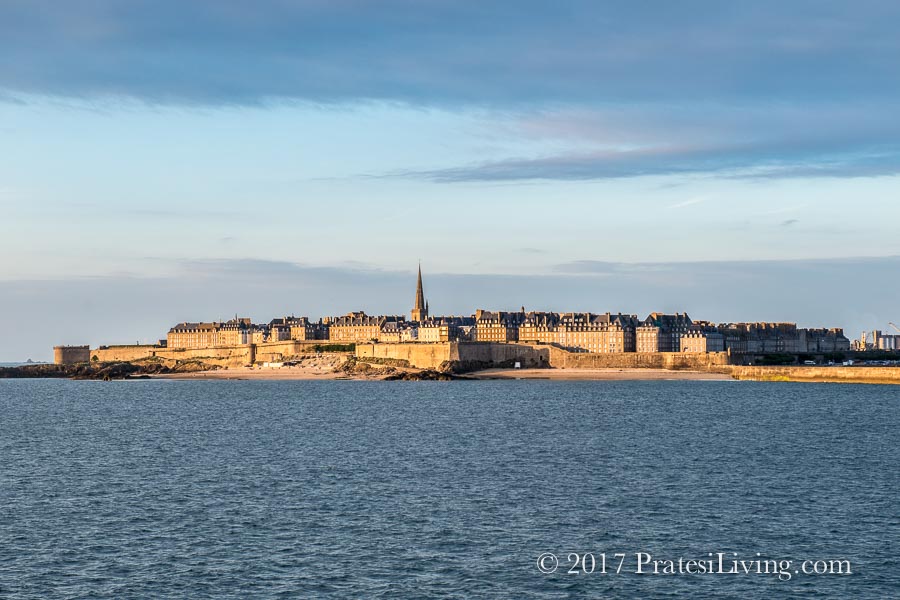
The sun setting over Saint-Malo

This content is protected under International Copyright Laws. Pratesi Living provides this content to its readers for their personal use. No part (text or images) may be copied or reproduced, in whole or in part, without the express written permission of PratesiLiving.com. All rights reserved.
Disclosure – We were guests of Windstar Cruises. The opinions expressed regarding our experience are our own.